Episode Transcript
[00:00:00] Speaker A: No, people gain freedom until some have to die. Some lose their wealth, some give up money. But whenever people want to really make progress, some have to sacrifice a lot. White America right Now is spending $30 million a day in Asia. Black and white boys are dying unjustly for nothing just to free somebody else.
So why should I worry about going to little old jail to free my poor people? Who's been catching hail here for 400?
[00:00:32] Speaker B: Welcome to Outside Issues with Audrey and Patrick.
You know, so much of adulting is just about going to war with the army. You have meaning sometimes you don't have. You can't find your second sock. So looks like I'm coming with one sock today, or I got two hours of sleep, or I didn't get enough to eat, or. Or I just had a fight with my significant other.
But I'm suiting up and I'm showing up, and you get to have the best version of me that I can muster. And the best version of me isn't always going to be remarkable, but it's what I got. And you know what? Better half than none at all.
[00:01:09] Speaker C: Did you get a chance to look at the news this morning? I did. I guess I did.
[00:01:14] Speaker B: You'll have to fill me in, because I know that after his summit with Putin in Alaska, I believe, which happened over the weekend, I was out of town, which I hear. See, it's hard. Like, I just think Trump is a terrible buffoon in all of his exploits. So whenever somebody tells me, like, oh, Trump, you know, just embarrassed himself at the latest summit, like, I don't know, I'm on a different metric, I think, than, like, most normal people. But apparently he did terribly with Putin or at least wasn't able to extract any concessions for ceasefire or anything like that, you know, de. Escalate the conflict between Russia and Ukraine. But then I know that this morning, right, he had his meeting with Zelensky in the. In the Oval Office. So. Yeah. What. What happened? Did you catch any of it?
[00:01:59] Speaker C: I didn't catch any of, like, the live news of it, but I did just see a headline that they're going to try to meet in Budapest for, like, those talks to continue.
But I guess, like, yeah, it was. It was kind of embarrassing. I mean, it was just kind of embarrassing seeing, like, this summit and, like, Trump had had, like, this tagline like, like, pushing for peace or something like that. I'm like, are you like, well, he.
[00:02:32] Speaker B: Knows that it would look good. I mean, I think, like, there was in 2016, he ran against Hillary as Like an anti war candidate.
And in 2024 he ran against Biden Harris as like an anti war candidate, which. And by anti war, I mean in 2016 it was more pointedly about the failure of the Iraq war. The Republican Party took America to war, or, you know, they were under Bush, they had majorities. And even though a lot of Democrats co signed, you know, the blood is on their hands. So like, obviously, I mean, I've never bought into this whole narrative that like Trump is interested in peace or, you know, has any real commitment.
But you know, that was some, an aspect of him that I think like less kind of apolitical or less informed, low propensity voters, participants.
That's something that they found appealing. And so that seems to be like, what this is, is Trump, you know, he wants to see if he can make good on.
Let's look. Can I hold on to the mantle of being like the peace president? Can. I think, I think maybe, you know, whatever he was going to try to do in Gaza, you know, that's been abandoned, but maybe in the Ukraine war, he can bring this to a close.
That's the idea, right?
[00:03:50] Speaker C: Yeah. Well, I'm not sure. It seemed more like, let's create a better relationship with Putin. That's just the vibe that I got. And not so much peace, but like his definition of peace, which is of course like completely casting away all marginalized folks that are a danger to him.
[00:04:13] Speaker B: It's a brokerage among like right wing strongmen, MbS and Netanyahu and Putin. Can we count Modi, I guess in India. But like, yeah, basically the, like, you know, all of the, the bad guys at the table in a James Bond movie, like gathered around like an evil conference room trying to figure out how to kill James Bond. Like that's like Trump's B.O. you know, and that's, it seems to be like, that his vision of success would be let's find something that all we can all be happy with and then we just divvy up the proceeds from that.
[00:04:48] Speaker C: Right? Definitely. Strongman.
[00:04:50] Speaker B: In terms of like the public, what can we do to placate our people? You know, like, what is a story that we can tell them that they will accept?
There's no version of this that I've heard that ends with, you know, Ukraine not having to, not some, some part of it being annexed to Russia.
[00:05:06] Speaker C: Right, right.
And this morning or the other night, I think it was last night, they, they bombed using like, I think 800 drones and like 10 missiles which killed eight people, including children.
You know, how it goes.
And, yeah, I've been on the.
The sort of situation between Russia and Ukraine for a little over 10 years.
I started following it when Russia annexed Crimea.
And, you know, with that, I just remember reading firsthand accounts of Ukrainian folks and them saying, well, we went to bed and then we woke up Russian, not Ukrainian. And so that was kind of like the.
[00:06:00] Speaker B: That's startling, huh? Wow.
[00:06:03] Speaker C: Yeah. Can you imagine, like, going to bed American and then waking up a different nationality? Like, it's. We, obviously, we've got the privilege and the American privilege, whatever you want to call it, but that would be just disconcerting.
[00:06:21] Speaker B: Well, what is. What was your reaction to, like, the early days of, you know, the. The invasion that happened under Biden? Because, like, I think what just kind of, like, stuck in my head early on was the way that it was talked about on the liberal side in America.
This, like, a focus on borders and a focus on kind of like, I'm just very pro people and the pro. The pro. Like, whatever. Whatever needs to be done in order to preserve life, you know, and to.
To bomb the least. And to send the least amount of people to war, you know, is probably the best course.
And I just felt like there was a lot of saber rattling going on over here and on. On Ukraine's behalf. And I'm not saying that wasn't righteous. I'm just saying that, like, I have the analogy, I suppose, to kind of like, because, you know, the. The both sides of political power in America are pro war and pro military industrial complex. And I, I was like, I was wary of Ukraine as being used as a proxy, you know, for America to just basically continue doing war and building bombs and, you know, but like, all the. Although the entire time, you know, just like, of course sensitive to the fact that, like, this was an illegal war. This. I kept comparing it and I heard comparisons between Putin's war and Bush's war because both were. Both were kind of waged on false pretense. You know, both were very, you know, it was like a war of conquest.
Not for any reasons of national defense, but just because of.
I want it.
[00:08:13] Speaker C: Yeah, that's actually.
Bush's war is something I've actually been talking about with, like, clients, just because, like, for some reason 911 has come up, like, where were you at 9 during 9 11? Like, you know, a lot of people will. When I reveal, like, how old I am, they'll be like, oh, like, so you remember. And I think that we were just at the, like, beginning of understanding it at least for me, when I was 14, I guess you were probably 15.
[00:08:45] Speaker B: Yeah, I was a sophomore at Miracosta.
[00:08:47] Speaker C: Yeah, I was a freshman.
[00:08:49] Speaker B: So you were there. We were there in the same school. And they stopped all classes and we just watched TV all day. Yep. Too bad the channel wasn't more entertaining.
[00:08:59] Speaker C: Right.
And I, like, specifically remember I bought into the whole Republican narrative of we've been attacked, therefore we need to retaliate.
[00:09:09] Speaker B: No, me too. I, I, I. Did you go home that day feeling like we need to get revenge?
[00:09:15] Speaker C: Something like that.
[00:09:16] Speaker B: Yeah, me too. And my parents were the ones, those old hippies who were like, wait a minute, you know what I mean? Like, that they were already kind of like trying to course correct me a little bit.
Those voices, those voices were rare at that moment in time.
[00:09:32] Speaker C: Absolutely. And I remember, yeah, I was like, totally on. It's, it's embarrassing now to think about it, but I ran for president and government class, and I, I was the last one.
I was last, last placed. And I realized it's because that I didn't know what I was doing. I had no political awareness or anything like that, let alone sociological awareness.
But I ran on, like, kind of Republican terms. And I'm like, oh, God, what were you doing? But so you were kind of like.
[00:10:11] Speaker B: Did you run on, like, I'm gonna be tough, like essentially like a kind of Harris Hillary type platform?
[00:10:19] Speaker C: Yeah, for the most part. But then also I was like, you know, sort of touting capitalism and like, feeding into stereotypes of marginalized people.
I mean, it was Miracosta. Like, look at our population, right?
[00:10:36] Speaker B: We're like, you know what it feels. You know that movie Elysium?
[00:10:40] Speaker C: No.
[00:10:40] Speaker B: Have you heard of it? There's like this movie, Elysium. It's a sci fi, and it's about like, the class stratification has escalated so much that there's a space station orbiting Earth where like the 1% lives. And then the entire Earth is just a slum. And like, you know, there's like life saving medical equipment, you know, on Elysium, you can literally like, bring yourself back from the brink of death in, like, these pods. But then like, yeah, everybody else who can't, you know, whatever the equivalent of six figures is or seven or eight figures is in like, space time in the world of the movie. Yeah, you get to live in Elysium. But whenever I walk around Manhattan and Hermosa beach these days, everything's so clean and nice and the storefronts, you know, are just fabulous. And everybody's wearing, like, the you know, the very nicest kind of like boutique clothes and drinking, sipping, you know, lattes outside. And it looks like Elysium. But that's. That's the body politic of Mar Costa is what I'm saying.
[00:11:40] Speaker C: Exactly. That's why I left and moved away.
Because, I mean, I left the South Bay in 2020.
Obviously that was.
That was a very emotional decision. Well, not a decision because I was always going to go because I got into school and UCLA and I just had to, for logistics, move over to west la.
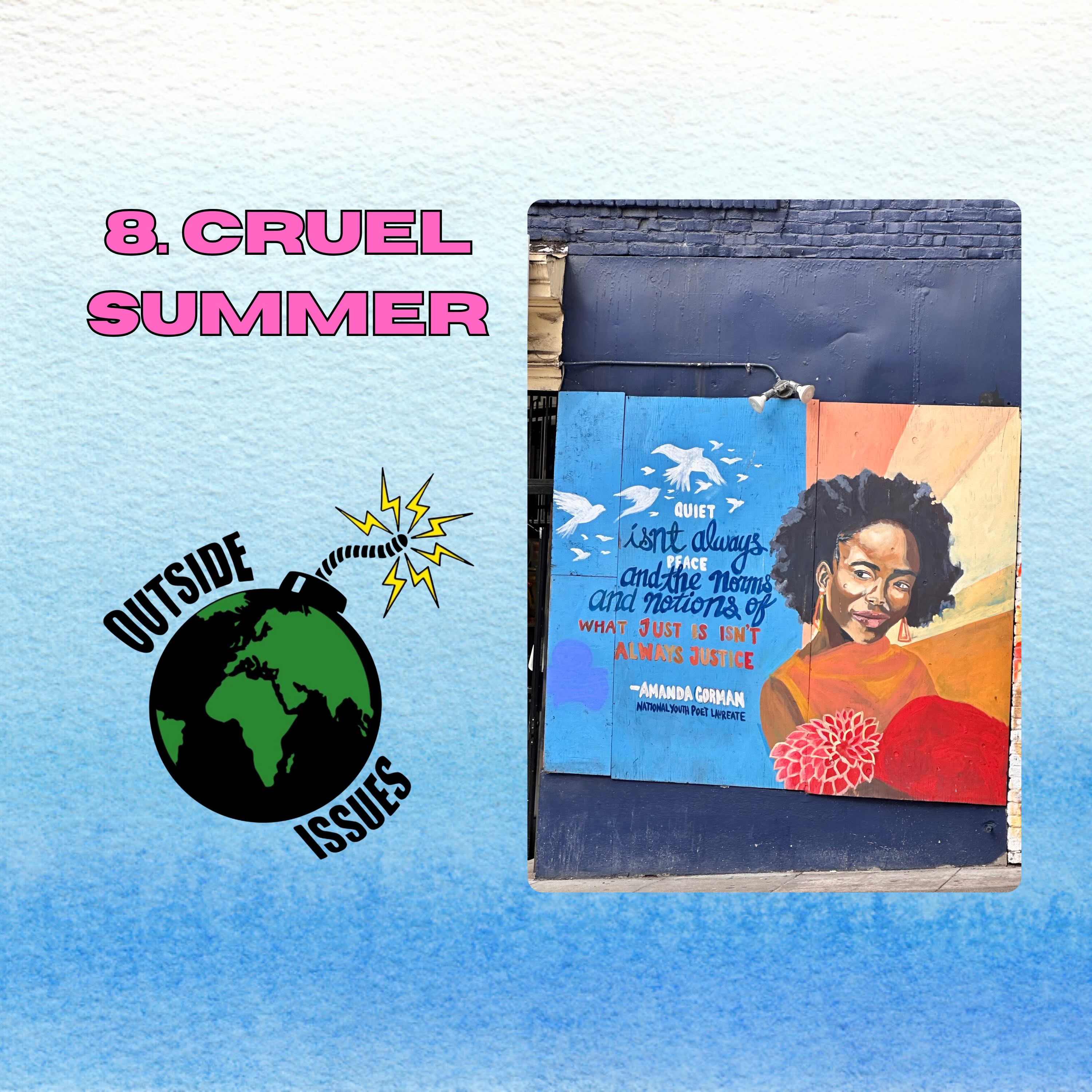
But I just remember, like, you know, them putting the wooden barriers against all of the shops, like in downtown Manhattan beach during, like the protests for George Floyd. And I remember seeing.
[00:12:24] Speaker B: Oh, wow. I didn't. I wasn't aware of that because, see, I was living in Joshua Tree at the time, so I kind of watched the whole thing on tv. Wow.
[00:12:30] Speaker C: Yeah. I'll have to send you some photos because I just like went on this walk to maybe sort of instigate a little bit or just get some intel.
I remember there was. They were shutting off. I. They shut off like the little sort of part of the street that goes right to the pier because I guess there was a small protest going on down there.
And I was like, how can I. First of all, how can I get to this protest? And they had every. The cops had everything blocked off and it was the, like. All the South Bay, like cities, cops. It was a. Torrance was there like Hermosa was there, Gardena was there.
It was just full on.
[00:13:15] Speaker B: So they just had all the, all the cruisers and like, basically all the cops were out just to like dissuade people from.
[00:13:21] Speaker C: Yes.
[00:13:21] Speaker B: Rioting or whatever.
[00:13:23] Speaker C: And I remember there was a dad with a little girl.
And the little girl asked a police officer like, are you gonna keep us safe? Or something like that. I was just like, okay, I gotta say something.
And so I went up to another officer and I was just like, how is it that my abuser, who's white, could do complete credit card fraud and make.
Yeah. Create these crimes and identity theft, but George Floyd gets murdered by one of your own.
And he's like. His excuse was they're trained differently over there. What do you mean? Are you. You're trained differently over here? As in like, you won't shoot black people?
Is that what you're saying? And he's just like, I'm not going to answer this. And I was like, okay.
And that's when I was just like, I am so happy to be moving out of here.
[00:14:29] Speaker B: It's funny, I just watched that movie Weapons. It's a horror movie. And there's a character in the movie, Alden Ehrenreich. The guy who played the young Han Solo plays like a beat cop in that movie who's like, there's this storyline where he's got kind of like this ongoing antagonism with like, the junkie who lives in the neighborhood. And he's always having to like, chase him down and through an alleyway because he's like trying to hit the meth pipe or shoot up or something like that, like in broad daylight. But. And anyway, he does some kind of.
[00:15:01] Speaker C: Myself at all, right?
[00:15:05] Speaker B: And anyway, he does some police brutality on this kid. You know what I mean? Like, the cop gets frustrated. He reaches into his pocket, you know, he's like, do you have anything in your pocket, sir? You know, is anything gonna stick it stick me when I put my hand in your pockets? And he's like, no. And he puts his hand in his pockets and he immediately gets stuck with the syringe. And so he just punches the kid and immediately, you know, like, recognizes he up that the dashboard cam has been filming him the whole time. And so gets into this kind of like, pathetic negotiation with like, the, you know, the drug addict as he's coming to. And. But anyway, all this to say, like, I was watching it and I was thinking, like, this movie gets it that like, these are unremarkable, just kind of rank and file. It's the system and it's the structures that hold them, and it's like the lack of accountability that makes them what they are. And, you know, all this stuff that we were talking about during George Floyd, like qualified immunity, you know, like, basically like implementing, not training. You know, we all, we've known for a while that it's. That's like a dodge, you know, that people like to bring up when we talk about policing. Is that like, let's just send them to a seminar to make them less violent. But it's about like, well, when, when a cop up, you know what I mean? Like, you know, need to have some mechanism for, you know, punishing them, removing them, you know, rather than letting them get shuttled around like, like priests after the Catholic Church's scandal, you know, and. But yeah, like, it's.
These are systemic problems. These aren't individual problems. You know what I mean? Though, Derek Chauvin was individually just a horrid murderer. You know, it's, it's, it's an indictment, but it's not. That situation wasn't an indictment of him. It was an indictment of this system that put him there and allowed him to do what he did and get away with it. Or up to a point. I was gonna ask you, so are you a Swifty? Do you like Taylor Swift?
[00:17:06] Speaker C: Yeah, I guess so.
[00:17:08] Speaker B: I like some of her albums, like 1989 and what was the one where she's.
It came out actually, like, right around the time I got sober. But she has that song, if I Were a Man.
[00:17:18] Speaker C: Yeah, I really like that song. I think this is a little bit of a neurodivergent trait, is that I will just listen to the same song over and over and over and over. And so by the time you know it, like, that's your, like, top artist. Just because you'll listen to like one song over and over.
[00:17:36] Speaker B: She had a podcast recently, the Travis Kelsey podcast, and she's. There's a way, like, I feel like Taylor Swift, it kind of like is America or like a representation of it. She's like the foremost.
One of its foremost pop stars anyway. Maybe in the number one, she's married the quarterback or is she married to Travis Kelce or They're just together.
[00:17:58] Speaker C: They're just together.
[00:18:00] Speaker B: When they do get married, it's going to be like, you know, the royal wedding or something.
[00:18:03] Speaker C: That's what I was thinking. Yeah, it's going to be.
Wow.
Absolutely.
[00:18:09] Speaker B: Yeah. But okay, so I got into an argument with suanne the other day and this is going to be an ongoing narrative, by the way. I got into a political disagreement with suanne because I forget why it came up.
We just talk a lot about, like, just billionaires and, you know, some. Some other person told suanne like, you know, there are no ethical billionaires.
And. And she was kind of needling me. It's just like, you probably agree with that, don't you? And I'm like, well, yeah, I guess I kind of do.
We looked at the Ben and Jerry's guy who's like, been very out and outspoken with, you know, advocacy for Gaza and stuff like that.
He is actually not a billionaire. He. His net worth is like in the hundreds of millions. So he's very wealthy, but he's not a billionaire. I was talking to somebody else over the weekend, a family friend, about what the Travis Kelce podcast is, because this is my first time hearing about it. Everybody watched this Taylor Swift interview because she rarely does interviews. It was described to me as an apolitical podcast. And I kind of that. That express that expression, apolitical podcast as like, A badge of honor immediately, like, rankled me, like, because it's just like, what that's so, that's something to be proud of is like the world is on fire and you just don't have an opinion about it. And you want to create kind of like a, an umbrella where people who don't want to like, get involved in, you know, helping their fellows or in calling out, you know, when somebody does a bad thing to somebody else, it has so much to do with watching the bag, you know what I mean? It's just like if you're apolitical, then you're not really hurting the bottom line. You know, it's not even about alienating sections of the audience. It's about not alienating the people that underwrite a lot of these projects. What if she were to say something, quote, unquote.
[00:19:56] Speaker C: She did, she did at one point.
[00:19:59] Speaker B: She endorsed, I believe she endorsed Hillary in the 2016 election. And then she endorsed Harris, I believe, in the 2024 election. And I think, I think her deal is that she will endorse women on the Democratic ticket who are running for president, but otherwise just kind of stays out of it. And I'm not bringing Taylor Swift out to like single her out.
Like, it's not, I'm not really wanting to talk about her necessarily. She's just one person, but just this idea of like, if you are in a position where it would make a huge difference to wield that power and, you know, and helping other people. Because I think Ariana Grande, you know, did a fundraiser for Gaza.
Ms. Rachel, we've talked about on the show, and Gaza is just one of many issues, you know, there's like, obviously what's happening with, you know, with our, with our immigrant populations and, you know, what's happening, you know, at the state and local level in terms of like, you know, yeah, just democracy getting shredded, all kinds of things, you know, war in Ukraine.
If you're the rock or if you're Taylor Swift and you've got like, you know, millions of Instagram followers, you know what I mean, just pouring over your every statement.
And you were actually choose to like make a statement about something. I bet that would move the needle. You know what I mean? One could say that that is culture, you know, that you, you could turn culture with, with a statement. You can turn culture one way or the other. And you know, in a media obsessed country like America, you know, that would actually, like people in Washington would have to look at that. And so I guess, I guess that's Just like, what I wanted to ask you about is just like, you know, what is. What's fair to like, expect from anybody with a platform or like, anybody with like, you know, with money and because here's the thing. I love art, I love film.
The whole world isn't just, just politics.
But I feel like, like just to. I'll just wrap up my rant here for a second that like, there's a movie I'm really looking forward to called One Battle after Another that's coming out in a couple weeks. It's Leonardo DiCaprio starring in it, and Paul Thomas Anderson is the director.
And these are like, very talented, you know, filmmaking people at the top of their game. And then the movie is actually about like left Revolution. It's based on a Thomas Pynchon novel. And it's like Leonardo DiCaprio plays kind of like a Gen X, like, you know, anti cop, a military guy who's like building pipe bombs in his scrubby apartment and stuff. And so it's got like the vibe of like something that you and I would like, really respond to. But like, I've been watching their press for it and their interviews, and they are like, not talking about any of the analogs to our present moment or like using taking that moment, that platform where all their eyes are on them, to really address, you know, like, and how much in deep we all are. And I just feel like that's like an abdication of responsibility.
[00:23:07] Speaker C: Personally, I think that's true. I think that literally every single person with privilege and money should be speaking up against everything that's, you know, that's me. But as a clinician, it's hard to not do counter transference with my clients who are suffering mentally.
And like, I, I do. Like, my, my client load is basically privileged white folks with money.
And so they have the luxury to turn off the TV or only watch news, you know, once a week.
And so I have to sort of triage like what's going on with, you know, with, with their mental health and what they need versus what everybody else needs, including them, that they may, you know, it, it would be, I guess, wrong of me to be like, oh, why are you, why are you taking this time to yourself? You have such a good, good position to, to talk about it too.
But some folks are just, they're, they're completely avoidant and it upsets me.
But of course, like, as a licensed professional, I, I can't let that get to my treatment of people. And so I'm just very frustrated. It Makes me very frustrated when everybody, not everybody, doesn't speak up.
And so I think for me, it's like, it's a. It's a war of emotions. There's people who have legitimate panic attacks.
And of course, I do have clients who are part of marginalized groups, you know, trans folks, brown folks, black folks. I do treat those people. It's still very hard to not put my own views in front of that, saying, well, I think that you should be, you know, be like, play attention to the news. Play attention. Pay attention to the news, because it affects you. It's going to affect a lot of people, including yourself.
And then, you know, this shitty feeling that you're having is going to get worse.
[00:25:35] Speaker B: Yeah.
[00:25:36] Speaker C: So it's hard to sort of convey that, but there's a boundary, sort of this unspoken boundary that is laid out for us that we.
We cannot cross that line.
And it frustrates me.
[00:25:50] Speaker B: What boundary?
[00:25:51] Speaker C: The boundary of like, oh, if you don't want to watch the news, I shouldn't encourage you to watch the news.
[00:25:59] Speaker B: Oh, I see. Yeah, yeah. So you mean when you're in conversation with some people and they just kind of like, they'll let you know. I just don't go there. And so. Yeah, yeah. And that's what you're talking about is.
[00:26:10] Speaker C: Yeah, yeah. Or people will say that politics is the thing that's make. Keeping them sick.
[00:26:16] Speaker B: Right. Or that. And, you know, and I think there's an aspect of.
Many believe politics is what's making the world sick.
You know, even even though politics, all that. All politics is, is the negotiation between all different types of people who believe different things and what have different interests. And the politics is the process by which you reconcile those into some kind of order or harmony. You know what I mean? Like, and there's no such thing as the absence of politics.
You know, it's gonna. It's gonna be one way or the other. And so do you want to participate in that and do you want to try and guide it to a place where that's not just gonna people up?
[00:26:54] Speaker C: It's just so complicated and the hardest part of my job right now. But if you have like a huge public voice like Taylor Swift, I. I would expect that you shout out against fucking tyranny and authoritarianism. I think I saw a small clip of Taylor saying, like, oh, if this fucking rapist wins, I'm gonna like, drink myself to death or some.
Something like that. And I was like, yeah, the people should. All. Everyone should be saying that.
[00:27:24] Speaker B: Yeah. I mean, 100.
[00:27:26] Speaker C: If. If, like, even if you're like to. At just the basic level, starting over his back in 2016, in that campaign with the grabber by the type comment where I was just like, I'm. I'm out. Like, obviously I'm out because he's a Republican, but I need to tell people not to vote for this piece of shit.
[00:27:49] Speaker B: That's the dehumanizing. His treatment of women is dehumanizing. And then what does that say about his relationship to a whole host of other issues? And I think that, you know, with that, with our politicians, we'll each have these touchstones, you know, I mean, that provide some kind of, like, window into, like, who is this person that I'm dealing with. You know, this is going to be the standard bearer for, you know, the most powerful country in the history of the world. You know, if he's got values like that, who knows what else. You know what I mean? What other skeletons are going to fall out or, like, what decision he might make?
[00:28:22] Speaker C: Sorry. Sort of pivoting on another subject.
[00:28:25] Speaker B: No, no, I mean, I don't see it as being a.
It's all the same subject. I mean, I guess I love art and storytelling, and I want nothing more than to believe that there's nothing more important than a collection of songs or a film or, you know, or a book or all these beautiful things that, like, artists like Taylor Swift or like Leonard DiCaprio create. And I, you know, still strive to create, but, like, I just feel like the way the. The lesson of the last, let's call it 10 years in the Trump era when just things just got super real, real for me, I guess, in a way, they hadn't been as vividly up to that point, is that, no, there are more important things and that there are, like, the stakes are very dire. And I just think that, yeah, power and privilege, real power and privilege, you know, like, I feel like there is a responsibility to do something with that. Artists are sensitive and artists are. You know, there's something childlike about.
You know, I always thought that about Kanye west, you know, and his Nazism. You know what I mean? Or just like, I think he still sees him. He doesn't.
Isn't fully cognizant of how incredible that impact is, is when he makes a song called hh. While I'm not comparing it in any serious way, Kanye west and Taylor Swift, you know, but they are similarly powerful, powerful and privileged. And their action or inaction has a consequence on the rest of the world.
[00:30:08] Speaker C: I have such an opinion about Kanye west and because he's bipolar and goes through psychosis, clearly.
[00:30:15] Speaker B: Well, yeah, I just want to. So with him. I was a fan for a while, so I mean I don't have quite that connection with him. I, I've written him off, you know, so have you mostly kind of like, I mean, is there any carve out you will still allow for him because of his mental illness? Illness?
[00:30:31] Speaker C: Oh, no, I, I don't think it's an excuse. I think it, I, I was more referencing like how he is sort of not accepting of his illness and that like that is reaching a lot of other people who have that illness.
That's like, oh, oh, I, I'm not bipolar. I'm just, I, like what did he say? I'm just autistic. I don't have bipolar. Which in indeed like lot of bipolar folks are neurodivergent, myself included.
But the constant denial of the illness, I think it really puts a lot of bipolar folks who have been diagnosed in, with that sort of mindset.
[00:31:16] Speaker B: So I love, oh my God, I love the way you put that he's, that he's not accepting of his illness because it's like the corollary to that or the alcoholism. You know what I mean? Like we're not responsible, you know, for our illness, but we're responsible with what we, for what we do with it. And in order to do something with it or to kind of like contain it, to treat it, you have to first accept and admit that that's what you got. And it's the same thing with, with bipolar. Right. It's just like, you know, he's got, there's, he's certainly got a lot of data to suggest that he's got this illness and he needs to take responsibility with it, but he's choosing not to.
[00:31:51] Speaker C: Right. It's, it's depressing in my, in my view.
I was going to ask, this is totally off subject, but I was wondering, the more progressive you get, which I've experienced, what. How has the second amendment changed for you or has it not changed?
[00:32:13] Speaker B: I believe in gun control, you know, and like most gun owners believe in some form of gun control and regulation.
So that is a no, that is a no brainer for me.
But I do feel, and I, but I do feel that our predilection to violence as a society in America, you know, it's, it's all this kind of interwoven thing with like capitalism and you know, which causes an alienation from each other. You know what I Mean, and then there's.
There's the way that, you know, I mean, so many of these mass shooters, right, are like white men. You know what I mean? And so there's kind of like, there's some toxic masculinity and kind of patriarchal, you know, coding in the mix. And you know, there is, there is like a class component.
You know, it's like there's.
What I'm trying to say, I guess is that I want gun control to be like a prong of a multi tiered approach to de. Escalating just the, the violence in our society. And like, you know, in like Republicans who as with immigration are like lockstep, you know, Republican party is lockstep in opposition to any immigration reform that would be like more humane or like more in the interests of most people, just like they are lockstep in opposition to any like common sense gun reform.
Also health care also like most things that, you know, that would help human beings. But like, but yeah, like, you know, I, I believe in gun control, but I don't think it's a panacea. Is that the word? Or it's not a.
It's not something where I feel like I can understand why less and less political capital is being spent on it. I feel like every cycle, because the problems have just become so omnipresent. You know what I mean? It goes beyond that. You know, even though mass shootings continue and the proliferation of guns and in America is like so beyond the pale, out of control and you know, there need to be less guns.
I don't know. How about you?
There need to be less guns. Maybe I could just kept it at that.
[00:34:32] Speaker C: There needs to be less guns.
I believe in pretty strict gun control and that even goes against, you know, my own diagnosis. Like if you have a serious mental illness, you've tried to attempt suicide, I believe that you. It wouldn't be the best idea to own a gun.
[00:34:54] Speaker B: Whenever I've had suicidal ideations, it's always the idea of shooting myself that I've had same. So I don't have a gun because I'm like, well, the first person that would get it, probably me, right?
[00:35:05] Speaker C: And say I was hospitalized in California back in 2021 and you have to sign a, a document that you agree to not own or possess or shoot a firearm for five years no matter what. If you're in the hospital either or it could be like in psychosis or it could be attempting suicide or it could just be hospital wide. But whatever.
I'm not able to shoot a gun or have anything to do with a gun, and I'm glad for that.
What I've been thinking about, though, I think I sent you this TikTok about the guy, the standup comedian who was talking about, like, you can't be liberal anymore. You have.
[00:35:54] Speaker B: Oh, yeah, I love that. That was really echoed a lot of my sentiments.
[00:35:57] Speaker C: Yeah. And somebody was just like, oh, my poetry will fight. Will fight fascism. And she's. The guy's like, shut up and just buy a gun or something.
[00:36:08] Speaker B: All right. Well, there's, there's, there's a, you know, certainly a lot of people on the left who are like, you should arm yourself because it's getting more dangerous out there.
[00:36:16] Speaker C: Yeah, yeah, that's, that's something I've been thinking about. And over here, like, especially in the area that I live, where it's pretty rural, you know, obviously there are just more guns.
[00:36:28] Speaker B: And.
[00:36:30] Speaker C: I think we're an open carry state, actually, which is interesting. But, yeah, just I. It just like permeated into me recently. It's just like, what do we do? Like, there's a tyrannical government that's like what the Constitution said for the Second Amendment, like, okay, right to bear arms or, you know, the right to bear arms to fight a tyrannical government.
And we've got that.
So what. And just I guess maybe the more radical I'm getting, the more open I'm thinking, like, we need to maybe prepare ourselves for.
[00:37:11] Speaker B: Well, here's the stage that I'm at. All right. And it's.
And I'm always got this in the, in the back of my head when I do fellowship.
But like, in my fellowship, I mean, obviously I spend a lot of time in AA and cultivating relationships and working with people.
But then, you know, I've been trying to cultivate relationships outside of it, you know.
[00:37:31] Speaker C: Yeah.
[00:37:31] Speaker B: Other tendrils of work and, you know, socializing and stuff. But like, I, I'm not yet at the stage where, you know, I'm. I've got my spear, you know, that I'm using to, to keep my boundary enforced, is that I want to have a phone that's filled with people that I have kind of trust and some kind of, like, human bond with, that I've put the work into cultivating and that I can as, you know, as things degrade or, you know, if I'm in a pinch or whatever, like, you know, I'm not going to ask anybody to live my life for me, but I'm going to have people that I know I can count on, you know, for any number of reasons, you know what I mean? But, like, I want to try and grow community, build community, you know, and. And some kind of I'll get your back. And this. And this requires me to get other people's back and put time into, you know, and, you know, in your. The work you do in social work, you know, this is like, very much a part of that ecosystem. You know what I mean? You're at the beginning of your career, but you've got a lot more, you know, growing to do. And I just feel like it may very well come to a point where, you know, we're going to need to do, to. To use violence, you know, regularly in order to protect those closest to us. But I'm just not yet at the place where I want to cede to that. I'm. I'm. I'm keeping it alive as a possibility because I want to live as long as I can, and I want the people I love to live as long as I can. But I know that that power and strength in numbers and, like, doing things together, you know what I mean? Standing together and with love, you know, I think that that's still. I still want to believe in that. That's kind of where I'm at.
[00:39:19] Speaker C: Yeah, I agree. I'm. I'm pretty much in the same place. I think maybe I have a little bit more of a. Like, a tiny pitchfork in my. In my hand right now, but that could be related to some other just, you know, experiences that I've gone through that are making me want to retaliate. Like, more like. Retaliate's not the right word, but protect myself in, like, a serious way, especially if there's going to be violence that comes with this.
[00:39:50] Speaker B: And.
[00:39:52] Speaker C: Yeah, so I think, like, staying in a loving community, staying in unconditional love is what we have to do.
And then I think if it does come to that, like, a complete, like, authoritarian, you know, tyrannical government that takes over our entire lives, then that might be a different story. But it's not happening right now.
[00:40:17] Speaker B: Well, it's not happening to us. And, you know, no judgment from either of us, really. I mean, we see these images of grandmothers being ripped out of their cars by ice, you know, masked vigilantes, essentially, or, you know, state. State sanction. And anybody who wants to take up violence, you know, against stuff like that, I feel is warranted, you know, but.
But I mean, that is. It's just an ugly outcome. Like, I don't. I Don't wish for. I mean, we got to try and.
Let's. Let's try and do something else to the extent that we can. You know what I mean? That is not like, an ideal outcome, you know what I mean? Even if.
Even if some ICE members get popped, you know what I mean? Like, it would make us feel good, but let's. Let's. Let's. Let's just defund ice. Let's dismantle it. Let's just send it into the dustbin of history, you know what I mean? That would be a better. An even better outcome than, you know.
[00:41:13] Speaker C: Oh, absolutely, yeah.
[00:41:15] Speaker B: Something. Something untoward befalling several of them, you know.
[00:41:20] Speaker C: Right. Yeah. I'm definitely not like, let's just all buy guns and, like, you know, fight against and create the revolution right now. Like.
Yeah, I. I believe that staying in community and being.
Having that co. Cohesion. That's the word. Yeah, I love that word, that cohesion of community and togetherness. Like what you were saying.
I guess I look at myself more as a vigilante type figure because it just sounds cool, like, small. So I feel like I sort of, like, weasel my way into things and watch them.
[00:42:00] Speaker B: People on the right, they really like to ornament themselves and, you know, this gear and, you know, they really like to see themselves as, like, you know, these warriors, you know? But, like, I would. I would love to see warriors on our side, you know. I would love to see warriors more on behalf of the marginalized and, you know, the ones that get pushed around. And, you know, our scene is kind of like feckless peaceniks, you know, who have no ability, no capacity to fend for themselves or anybody else, like. Yeah, of course. I mean, I would, you know, why should the right. Why should the bad guys get to own strength, you know? Like. Yeah, I'm with you on that.
[00:42:43] Speaker C: Yeah. I think that if.
Yeah, it's just a complicated, weird thing that I think that my radicalization has sort of, like, taken me a little bit, but it's very, like, small.
It's not really developed or thought through.
[00:43:03] Speaker B: We're always trying to direct it towards the positive.
[00:43:05] Speaker C: I don't know if I told you about my ancestors.
[00:43:09] Speaker B: Quakers.
[00:43:10] Speaker C: The Quakers, yeah. They. They are completely, like, loving community, strength in numbers.
So, of course, I default back to my heritage at all times.
[00:43:23] Speaker B: Well, you've got a good one. I'm not really familiar with myheritage. I hope that I have some ancestors out there, you know, that did something nice rather than just colonial projects.
[00:43:33] Speaker C: Right. Yeah. My ancestors, either Quakers or Italian folks.
It's like my duty to be peaceful and do what needs to be done in order to keep the peace for all. Sometimes that may seem scary. I think about my ancestors and how they raged against the Puritans for the greater good. So I just always keep that in mind.