Episode Transcript
[00:00:00] Speaker A: So many of us have survived and so many of us have not.
And if you're still here and have lived to tell the tale, please sing, celebrate and rejoice in honor of the beauty that you are.
[00:00:41] Speaker B: Welcome to Outside Issues with Audrey and.
[00:00:43] Speaker A: Patrick.
[00:00:46] Speaker B: We are so fortunate to have Dr. Jamie Merrick with us. She wrote a fantastic book called trauma in the 12 steps. We've interviewed her on the sister podcast Emotional Sobriety with Alan Berger and Tom Rutledge, and I enjoyed her presence so much on that podcast and then also at the Recovery Reimagine workshop in Dublin that we attended earlier this year when I first became exposed to her body of work. How's it going?
[00:01:13] Speaker A: It's going. So you did a pretty good introduction of my professional background. I am a therapist by background, licensed professional clinical counselor. I've been in the field for a little over 20 years.
I have written books related to this topic, most notably trauma and the 12 steps, and there's also an accompanying workbook and meditation guide. Yet I am also a person who identifies as being in long term recovery for 23 years now. And I'm somebody whose recovery path started in the 12 steps. Yet I needed a lot of that outside help we talk about, particularly in the form of trauma therapy in order to sustain my healing long term.
[00:01:56] Speaker C: So I also have a background in mental health. I've been in this field for about 10 years now.
I'm a licensed clinical social worker, so a little bit different than a licensed mental health counselor which is no longer considered a professional degree. My master's of social work by Trump, which is fantastic.
[00:02:17] Speaker A: I did an article on that. I'll send to you too that you can post with the show notes if you like.
[00:02:22] Speaker C: Perfect. It's. It's been a point of contention for me and something I need to work on on my own trauma recovery, to be honest.
So that's my background. I, I have focused. My background specifically is in domestic violence and sexual assault, interpersonal violence, family violence. I've been involved in that since 2017 and I also identify as someone in long term recovery. I have nine years at this point and I have been thinking a lot about the, the, the steps and what it meant to me and what it meant to my trauma.
I came into the rooms of AA completely traumatized. I was in a long term domestic abuse relationship with a lot of sadism. I want to say physical, mental, emotional, sexual, financial abuse. All, all of that.
And I want to say that Alcoholics Anonymous saved me in that way.
I went straight into meetings. I Went straight into outpatient rehab, which introduced me to meetings, obviously.
And at the same time as I'm doing the 12 steps, I was also working with, like, a psychologist and a counselor and multiple folks to address my trauma from the domestic violence and sexual assault and all of that abuse, and including childhood trauma, to be specific.
So I was kind of going back and forth between the two.
Sometimes they would clash.
And, like, you were, like you have mentioned the concept in the 12 steps, a lot of times has to do with helplessness, and that is something that did trigger me in my recovery from trauma, this trauma that I went through. Because in domestic violence, you are helpless. You know, you're. You're at the hands of this abuser quite literally a lot of the time.
And so I. My.
My relationship to the 12 steps and trauma were that the 12 steps and AA were exactly what I needed at the time, which was in. Around. Which was in 2016.
It was exactly what I needed to sort of piggyback on top of my. On top of my trauma recovery.
So that's, like, kind of a little bit about my history.
I don't know if this is an appropriate question, but do you have, like, a similar history or are you comfortable talking about your trauma?
[00:05:33] Speaker A: Well, sure, I.
One thing I want to say, though, and this is why I think I took to the 12 steps, is it was very much explained to me by an early recovery mentor that there's a difference between being helpless and being powerless.
And how it was explained to me initially because I was getting in some of these head twists in my early recovery about, oh, by admitting powerless over alcohol, is that saying that I don't have empowerment as a person? And I'm not saying this will work for everybody, but how it was explained to me in a way that really stuck is when I say I'm powerless over alcohol, that is admitting the reality that if I put that in my body, it will win.
And by being able to admit that and see that and work that step, that's where I was able to free myself and from a lot of these situations. So my. My childhood trauma, on one hand, was very subtle.
I was bullied very significantly at school. I was always the odd kid, the fat kid. And going to school, especially around, like, third, fourth, fifth, sixth grade was just a very miserable time for me. And there was a bit of a resurgence of that in the 10th grade. And I was raised by. By two very religious parents who were religious in their own way in that when I was five, my dad left the Catholicism that I was born into and he became a pretty hardcore evangelical. And my mom would not convert with him, but she became even more Catholic really as a response.
So I was raised in two high demand religions. Each thought the other was wrong.
And as the oldest child, I had a lot of those hero child dynamics that we read about in traditional family recovery studies. I was always put in the middle of a lot of bites. And then, oh, I also pieced together around the time that I was 11 or 12 that I liked girls and boys both. And I was trying to figure out what all of this meant with sexuality. And in both churches that was just very much shut down.
So I lived my life with a lot of pain and suffering, yet also having been trained very well that you can't let people know there's problems at home.
And so I was very much a golden child through high school. And then when I left my parents house and reached college, it was like everything collapsed because I realized when going to college how wrong they were about so many things. And that's when my drinking really escalated. And a lot of what my therapy has helped me to see is that so much of my drinking and early drug use started as a chop truck, a trauma response, or I shouldn't say a trauma response, but as a way to deal with these massive amounts of feelings I was feeling after so many years of having to stuff them in.
So I was very fortunate, as I write about in trauma and the 12 steps, that the person who introduced the 12 steps to me was a retired clinical social worker and understood that trauma was a big part of my story.
And so not only did that help her share the steps with me and the early introductions to the program in a way that was a little more gentle.
She also was able to identify that, yes, when you go back, because I was working in Europe at the time when I met her and then I came back to the US for graduate school. She said you were likely going to need to do more trauma specific counseling on some of your responses because the impact of unhealed trauma has showed up in every relationship I've tried to have, whether they've been romantic relationships. I've been married and divorced twice.
A lot of friendships have been challenging because of that. Yet I'm glad for my, my friends I have and continue to have through, through recovery who helped me to figure out what it means to be a good friend.
So that's, that's the little bit of the story in the nutshell.
[00:09:47] Speaker C: One thing, of course, I think what it seems to be the main Theme of your book is they're just addicts. They're just born this way. Something never.
It doesn't matter what happened to them. This is how you treat them, just as addicts and just with addiction modalities, if I'm correct.
[00:10:09] Speaker A: Well, to be clear, that's not what I'm saying in my book.
It's a lot of the attitude that I've been trying to work against through my career because as I write about in the book, my very first clinical director out of graduate school, when I, yeah. Endeavored to bring trauma into the conversation the way that my sponsor did for me, he shut me down because it was very much this idea that you're complicating matters by bringing up trauma. And until, quote, unquote, these people realize, as you picked up on their just addicts, they're not going to get better. And everything in my soul bristled against that.
And historically, I hesitate to say this, but I do understand where some of that thinking is coming from.
Because at the time that AA was developed in the late 30s and really rose to popularity in the 40s, psychoanalysis, which was the primary clinical modality at the time, really wasn't coming up with a lot of answers.
And Carl Jung himself wrote the famous letter endorsing aa, acknowledging that the spiritual solution it offers may pick up where the field of psychology and psychiatry was not providing answers and solutions.
I think the very traditional old school AA approach, which argued that has still stayed with a lot of people over the years. And, you know, where I have essentially landed is I'm not a big fan of what a lot of my trauma colleagues argue either, which is, oh, you just treat the trauma and the addiction will clear up.
I've not seen that be too successful. I think that's what the psychoanalysts in the 30s and 40s tried and what others have tried over the years. That, yes, healing the trauma is a big part of it. Yet I feel there also has to be an acknowledgment that addiction, or whatever we want to call it, does change the brain. There are certain things to accept about that, and there are also certain things we have to do. If I may use some naughty language here to get our heads out of our asses.
Lifestyle change that I learned in 12 steps in a way that I don't see being taught in trauma therapy.
And I teach one of the main modalities for trauma therapy. I am well schooled in where the trauma industry has gone with a lot of their teachings around addiction. And I Do think they're missing a lot of the vital spiritual components that exist for so many of us. And a lot of the standard lifestyle things, concepts like honesty, open mindedness, and willingness that I think can be very simple strategies we miss in healing addiction. So like many things, I believe the answer is somewhere in the middle between.
Like, I don't certainly agree with what an old school 12 stepper may say about a lot of things, But I also struggle with where many of my trauma colleagues just want to dismiss the 12 steps.
[00:13:35] Speaker C: It's interesting that you bring up spirituality and the healing part of trauma.
Since you were a. You're a religious trauma survivor. How did that play out for you?
[00:13:47] Speaker A: For me, what I found in the 12 steps was the healing to a lot of religious trauma. But it could have gone poorly if I had another sponsor in a different meeting that I went to. Initially, I feel the concept of God of my understanding was something I felt was so revolutionary for me, especially because the woman who introduced me to the 12 steps was a devout Catholic. I saw how her Catholicism played out in her life. But she suspended those rules and meetings because she was very much God of my understanding. And that's what I want you or anybody else coming in here to find.
And if she heard any overly religious talk in meeting, she would shut it down. And I found that just very delightful because it had this sense of that's not why we're here to talk about Catholicism or to talk about anyone's specific religion.
So I had this brilliant experience, probably about seven, eight months in, where it struck me that the God of my understanding is a God that loves me, is a God that has nothing to do with anything I was raised with. And I felt the God I met. I said this in one of my songs. The God I met at the bottom of a bottle, who picked me up out of it, is that God of love. And that was all the direct evidence I needed to show me that so much of what I grew up with was just not true.
So I credit 12 steps for. For helping me with. Do a lot of that spiritual repair and teaching me a more accessible spirituality. Yet to make another point, if I didn't have the sponsor, I did.
[00:15:33] Speaker C: Well, that's really great that you found such a wonderful sponsor, because in my experience, that's very rare.
[00:15:40] Speaker A: I like to say she found me because I wasn't looking.
And at least as my story plays out, it was trusting flow, trusting the process. And my higher power put into my life who I needed to meet. But to that point of that sponsor.
When I first wrote trauma and the 12 steps in 2012, someone asked me what my hope was in writing that book, and it just flew out of my mouth and my heart so quickly. I would love everybody to have the kind of sponsor that I had when I first came in, because she understood trauma, she understood addiction, and she just handled me with a lot of care, seeing where both of them played out in me.
[00:16:32] Speaker B: My sponsor said something really nice to me the other day. I was talking to him, and then we got. I got to the end of the. Whatever it was I called him about, and then I just couldn't think of what to say. So there was just a long silence, and he was just like, so what else is bothering you, Patrick?
And I was like, well, lots. And then I told him some more. But, I mean, he. He made himself available. He's got two young kids and he's busy all the time. But I just. That presence and that kind of attentiveness to. Because, like, I'm reticent to talk about myself. I think sometimes, and maybe I shouldn't be, especially when I'm working with a sponsor. It's like, that's the one person who, if you're really in it, they're there to listen. So anyway, I relate to your positive experience. Are you still in touch with her?
[00:17:24] Speaker A: She passed away in 2017.
She was only my official sponsor for about the first two years, and then I moved back to the US And I had two other sponsors in. In my time, but I stayed in touch with her until pretty close to the end of her life.
And I will always say I am alive because she worked her 12th step and her 11th step, too. She was a big 11 step person and really emphasized.
She taught me how to pray, really, because so much in that 11 step is praying only for a knowledge of God's will for my life and the power to carry it out.
And it's not to say that my will and my wants aren't important, but praying the 11th step has helped me to see there's so much I'm not in control of.
And a lot of the things I think I want end up coming to me in a much different way years later.
So she was really big on the 11th step. Another strong lesson I got from her about prayer is in how to pray for others.
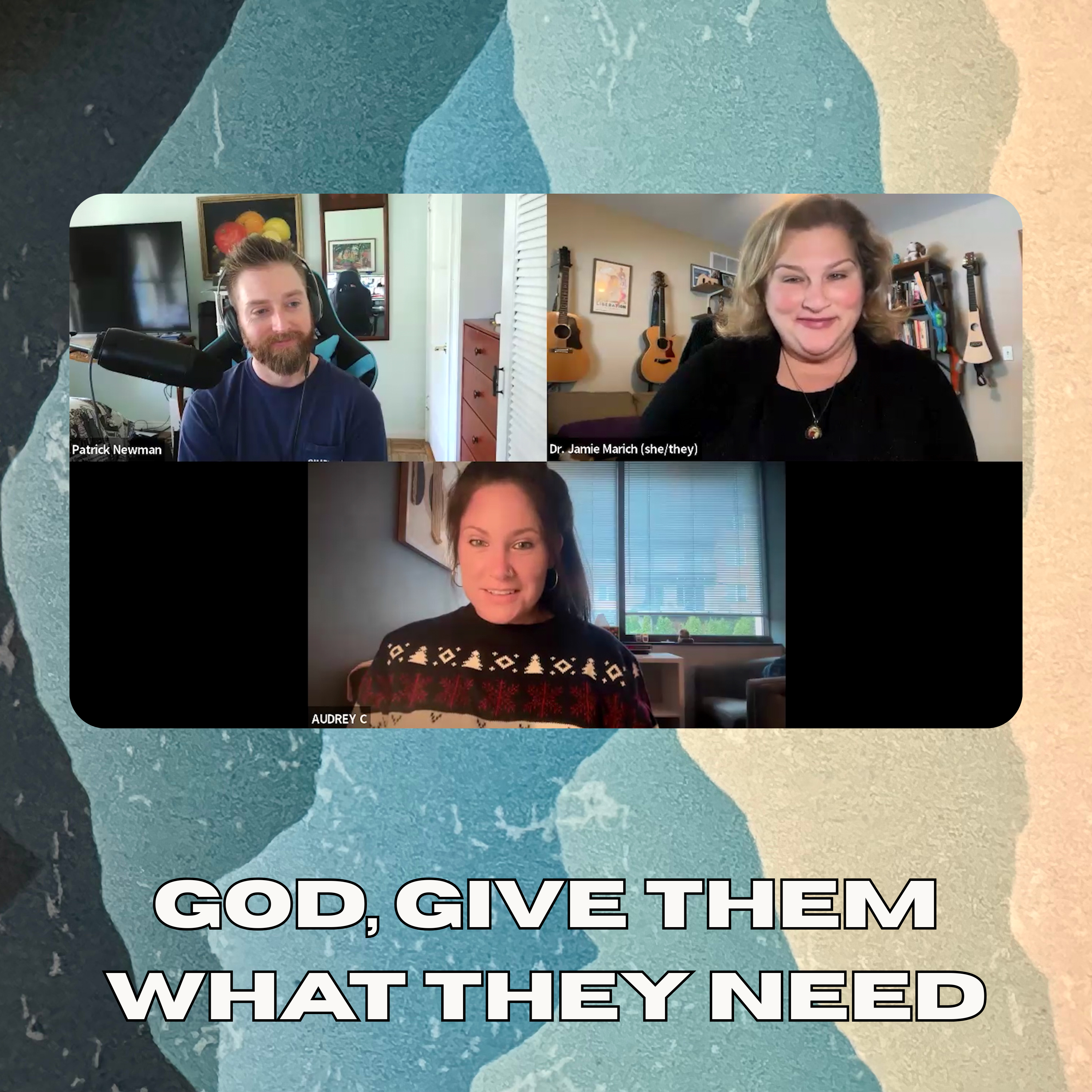
She taught me the prayer, God, give them what they need.
Because in the example of praying for a loved one who has their own addiction issues or their own mental health issues, we may have this tendency to pray.
God make them stop drinking.
Help them get right. Help them get this.
And, you know, this may be a little old school for some people, I admit it, but they may need a certain consequence to happen in order for everything else to line up in their life, or they may need something to happen in order for you to get free of them. It's just there's so much we're not in control of. But like many things in the path I've embraced, the philosophical path I've embraced, two things can be true at the same time.
We can find our empowerment and our power in our actions, while also realizing we're powerless over so much of what happens in the world.
Or if that feels a little harsh, there's just so much we're not in control of.
And I have very much felt I can credit my recovery for helping me to embrace the two things can be true at the same time. It's a kind of principle of dialectical behavior therapy in the clinical field. Yet before I even knew what that was, I felt I first learned that from my sponsor. I think a lot of what is taught in modalities like DBT and acceptance and commitment therapy were in the 12 steps first, and I do think they were in a lot of Buddhist and yogic meditation principles even before that.
So I do think every generation tends to come up with something that they see as new for the needs of that generation.
Yet a lot of these ideals, which I've really learned in my spiritual study, boil down to love. And letting go can be found in just about any healing path. And it's hard to let go. It's hard to let go.
[00:20:44] Speaker C: It's very hard to let go and look at the world with unconditional love and your higher power with unconditional love. Patrick, what's your take on unconditional love?
[00:20:53] Speaker B: Everything's conditional. I feel like, you know, everything's conditional to a certain extent. Everything's transactional. My mom might be the only person who will love me right down into the filth, you know, and that's been borne out by.
That's been borne out by, you know, the journey of our relationship. And kind of like where I went at a certain point with my addiction and.
And my recovery. I credit a lot to her because I think what, finally the switch, if there was just one that flipped inside of me, was the recognition that I could go even lower and that she would still be with me. And I didn't want to do that to her.
So I. That opened up a window for me to start, you Know, letting sanity back in and start taking certain actions. But, like, I feel like.
And this is all just coming from, like, my lived experience, you know, I.
There's. There are rules to every relationship, you know, and there are things that, you know, there are things that I can do and things that I cannot do if I wish to.
To remain in that loving connection. And this. This applies to, you know, my most intimate, you know, familial relationships, to my romantic relationships, to my relationships with people in the workplace and, you know, acquaintances in the, you know, rooms of recovery.
I.
Unconditional love. I just.
It sounds really good.
I. It just doesn't show up a lot for me, and. And I haven't seen a lot of it with my own two eyes.
[00:22:34] Speaker A: I don't know.
[00:22:35] Speaker C: I mean, I.
[00:22:35] Speaker A: As you're talking, I could see where it is a loaded phrase, and it's. It's a tricky phrase, because I know my father certainly felt he was loving us unconditionally, and that's why he thought so much of this religious horribleness he was exposing us to was for our own good.
So I don't know, because it's activating. That phrase got thrown around a lot in my house in a way that I don't know what I really feel about it, because I think because of the fallibility of humans, none of us is going to love perfectly. Yet I think we can endeavor to try being the version of love we would like to receive.
[00:23:21] Speaker B: We say that we love our pets unconditionally. I've noticed that they love me unconditionally.
[00:23:29] Speaker A: Unconditionally taught me so much about unconditional love. Yeah.
[00:23:33] Speaker B: What do you think about when we pray for those that we have issues with? Pray for the villains. I don't know. Like, that's. That's. People talk about that in the rooms, and I'm always a little skeptical. Like, I'm not. I can see the value in it, but, like, I just feel like, is that really a prayer that's made in good faith? I don't know.
[00:23:52] Speaker A: Yeah. So for me, I'm gonna. I. I made big book thump a little bit on this one because I. I have found the resentment prayer to be one of the most valuable tools the program has given me. And if you can't do resentment prayer, loving kindness, meditation is a good alternative, and I can cover that as well, because I do think there is spiritual value, even in your rage towards someone, including the leader of our country.
I think we benefit if we can send goodwill in their direction, because it's a way of.
I don't know, some people would see it as like the power of pardoning. I just see it as I am practicing being a good human in the face of other people not being good humans. But going back to program, I learned from the resentment prayer.
That's the prayer, the suggestion. If you find a person or thing you resent, pray for it for two weeks, pray for it every day and you will find what is it? Pray for them to have every health and happiness, everything you want for yourself.
And the book even says you may not mean it, but do it anyway and you'll eventually come to mean it. And there's also the advice that you can pray for, the willingness to start praying for them. So taking you back. Early in my career, I was made sober about two, three years.
I was working in the community rehab center in Youngstown, Ohio where I was from. And I was having such free rent in my head about a friend. And it was the pettiest thing. I'm embarrassed to even say how petty it was, but there was something I could not get over about this behavior that this friend was exhibiting. And I felt he was trying to take another friend away from me and all of that.
And so it's like, okay, resentment prayer, you got to start praying for this person. And I couldn't it like that's how petty this resentment was. And so I did the thing that was suggested. I prayed for the willingness to start praying for him.
And I did that for a day.
And the very next day I was co facilitating a group at the treatment center and there was an individual in the group who talk about the practice of practicing forgiveness towards the person who murdered his son and how that's the only way he can really get through this is to pray for the murderer and to pray for his goodwill and good being. And I'm like, if he could pray for the person who murdered his son with good intention, I can pray for my friend who is making me mad over this very petty thing.
And within a day or two, the resentment cleared.
So that's, that's just an early lesson I. I learned about the power of the resentment prayer. Now with my father, I had to pray at a heck lot longer than two weeks.
It was a long, maybe six, seven month ordeal of praying for him.
And I'm still in a place in my life where we don't have a really significant relationship. But I do wish him well and I don't want to see him suffer.
Even though my editorial commentary is he may be creating a Lot of his own suffering.
So I know, and I want to acknowledge a practice like that can feel like hell if you're in the thick of being impacted by trauma or trauma triggers.
I also know how well it can work.
[00:27:38] Speaker C: I was just wondering if.
If and when you come across folks in your practice, currently or in the past, who refuse to forgive their abuser, what do you say? Like, do you.
[00:27:56] Speaker A: So there's a difference between forgiving an abuser and praying for them or wishing them goodwill.
There's a difference between forgiveness and acceptance.
Because I personally see forgiveness as a religious construct that some religions amplify. I think the concept of forgiveness can get used abusively, particularly in a lot of church settings where somebody is blowing the whistle on an abuser. It often gets turned back on the victim as saying, well, you're the unforgiving one because you can't forgive them and move on. So the word forgiveness is very loaded.
And I would say if you feel forgiveness is helpful for you after you've done the work, great. But I do not believe you have to forgive in order to. To move through or to pray on the resentment. But I do think, and this is also something I value from 12 step, that acceptance is imperative. Now, accepting means does not mean you have to like it.
I want to be very clear about that. Acceptance does not mean resignation.
Accepting this is the abuse I experienced does not mean you have to be okay with it. It does not mean you have to forgive the person. Yet acceptance is the answer to all my problems today, as it's taught in the book.
Essentially means I have to stop fighting the reality that something happened.
Or if I'm a person who is seeking justice for my abuse and it's just not coming because of the sordid way our systems are.
I think we all have to make decisions like, do I accept that this is just the way things are right now and so I can move on from that place of acceptance, or do I keep fighting?
Now, for some people, they feel they get the peace in the fighting that was never me.
And I remember another big program moment I write about in trauma and the 12 steps, where at the time I got sober, I was very much in this mindset of when everybody else understands, then I'll be okay.
When my dad can apologize for what happened in my past, then I'll be okay. When my mom can understand where I'm coming from, then I'll be okay. When the boyfriend loves me the way I want him to love me, then I'll be okay. When this happens, Then I'll be okay. And I remember at an acceptance meeting in my first year of recovery, hearing the passage, and it hit me like a light bulb at that point.
That may never happen.
Dad may never apologize. Mom may never understand me. The boy may never love me the way I want to.
Sure, sure. And that does not impact whether or not I can get well. And talking about powerful versus powerless, that was the most empowering experience I ever had, was just having that acceptance shift.
So I would encourage people, if you're struggling with forgiveness, I get that.
I get that. Especially with forgiveness being such a loaded word.
But might practicing dbt. The idea is radical acceptance.
Can accepting something, maybe that's even out of character for you to accept, can that start the shift?
[00:31:37] Speaker C: Oh, yeah. I've had many, many clients I've worked with struggle the most with radical acceptance.
I struggle myself with radical acceptance and going back to unconditional love.
I was just meeting with my own counselor, slash, I guess you could call him a sponsor, like, figure.
The work that we do with my trauma and unconditional love has to do with neutrality and looking at every situation through a neutral lens. And once you look through a situation through a neutral lens, that's when you're able to look at it with. Look at the world, really, with unconditional love.
[00:32:22] Speaker A: It's a good strategy, and I think it's one that is challenging to practice during these times.
Yet it's also something I know is getting me through these times.
[00:32:33] Speaker B: Has anything changed about your personal recovery practice or your clinical work or your writing since things have ratcheted up considerably with Trump and the Republican Party's war on anyone who is not a cisgender white man?
[00:32:54] Speaker A: I mean, it is what is on the heart of every queer person, every trans person, either who I work with or who are in my sphere of students or friends.
[00:33:05] Speaker C: And.
[00:33:09] Speaker A: This is where it's tender for me, because I have a lot of these personal beliefs, obviously, about acceptance, and I'm willing to share them if people want to hear them.
But I am also never in the business of negating what people feel.
And I have found during these times, it has been imperative to embrace the fear a lot of people are experiencing right now. I mean, I'm afraid in a lot of ways, as a bisexual woman, as somebody who does not have a conventional Christian path.
And a lot of what we talk about now is Christian nationalism. This is the stuff I grew up with when my father converted.
So none of this is surprising me. And I'm preparing for things to get Even worse, based on what I know a lot of hardcore Christian nationalists want. So I'm certainly not in a position to shut down people's fears. I also know if I drink because of them, any fears I have or any anger I have, it's not going to make things better. It's not going to change who's in charge. It's not going to help my ability to respond and help my community.
So again, it's the both. And I can hold and experience a lot of that anger and frustration about what is happening in the world. But also knowing at the, you know, this is where I go back to my first sponsor, because I remember I was with her on 9 11. I was not officially sober yet. I was still just kind of going to meetings and trying to figure it out. And like a lot of people, was just experiencing a lot of emotion and she didn't shut it down. But she also said, this is also just one more day we have to stay sober.
And that really put it in a lot of perspective for me that taking a drink is not going to make anything better.
[00:35:11] Speaker B: I draw a lot of strength from being in the presence of people who can really recognize what I do about how fucked everything is.
[00:35:20] Speaker A: But.
[00:35:21] Speaker B: But they, they aren't allowing themselves to be burnt up and they are redirecting that energy into positive uses. And because I can't always find that positive use right away, and I am not always good at redirecting it, but I think that there's something through osmosis that I can kind of learn, you know, and so I bet that the people you work with get a lot from just learning by your example, because.
[00:35:52] Speaker A: I do believe in a regime like this. Your very existence is advocacy.
And I know that that can sound like a platitude, yet they want people like us to go away.
I'm not going away.
And I've even debated a lot of this because I have citizenship in another country.
I could leave if things get really bad. It's still a plan, particularly if it would mean I'd be in a position to help others better from another country.
But I'm not being pushed out of my country.
And I'm very holding in that resolve right now. I am going to be here as myself, as I am.
And I think the more and more of us who stand up about it and put our beliefs into positive action, knowing history, I do believe it will make a difference, at least at some point, even if it feels pretty hopeless now.
[00:36:58] Speaker C: Have you redone the 12 steps yourself?
[00:37:01] Speaker A: I have. I Have. And in the trauma and the 12 steps workbook that goes along with the book you read, we have suggestions for people who are working them through a second time.
And a lot of what my daily life looks like is, for instance, I pray the third and seven Step prayer every morning, and when I do my prayers at night, I do some version of the 10th and 11th step.
So for me, it's. It's not necessarily anymore about the event of doing the steps, but I. I try to work them into my life and my prayers where needed. Because a big thing I still teach and believe to be true for myself is the steps themselves have done a tremendous amount of good for me.
So many of the problems exist in what I see happening in meetings and treatment centers and how people interpret the 12 steps.
[00:37:54] Speaker C: What have the 12 steps done for you?
When it comes to things like diagnosable PTSD and flashbacks like, say you have a flashback, what part of the 12 steps usually helps with that?
[00:38:10] Speaker A: Somewhat of an unpopular opinion in trauma circles on this, but I do think there is a lot of power in the powerlessness concept, even in working with flashbacks.
The word powerless is a bit of a controversial word with some more trauma specific scholars and whatnot, because a criticism I've heard is, oh, the 12 steps are all about powerlessness when we're trying to teach people empowerment.
I would argue that powerlessness in the steps is more about the Buddhist concept of surrender or how, you know, Buddhist background might interpret something like surrender, which is, I didn't cause this. I can't control it. It's something that's just happening. And so when I can claim a concept like powerlessness, then I could go through the other steps, if applicable, to.
To determine if it can be helpful for me in navigating that flashback. Yet something I want to reiterate, though, about the trauma, the 12 steps work. I never put it out there as an intended path for, like, trauma treatment. In and of itself.
The intention was always to trauma update trauma, inform the steps, generally how they've been used in healing, addiction and related issues. And a lot of the programs and folks running them have just lacked a lot of that trauma language. So I never want to suggest that the steps alone could be something that is helpful in the treatment of PTSD or even addiction, because as the name of your podcast suggests, a lot of us have outside issues that will need other help than just meetings and step work.
[00:39:59] Speaker C: I have not really attended meetings or really done the steps or been engaged with any 12 step programs really deeply for quite some time. Now.
And what is your opinion on folks in those fellowships that judge that?
[00:40:24] Speaker A: I also am somebody who doesn't go to meetings regularly anymore. Yet I still claim abstinence as my path. I still see the 12 steps as my path. I still use a lot of 12 step principles in my life and I have a strong 12 step support network of people for people who judge it. I think it's similar to people who judge folks who don't go to church anymore. Look at what is it about meetings that feels unappealing to people who have maybe been around for a while or feel like their needs aren't getting met?
[00:40:59] Speaker C: If you could ask each person that's affected by this regime to focus on one of the steps in the 12 steps, which one would you suggest?
[00:41:09] Speaker A: What a good question. I'm thinking on that a minute. I love the question.
[00:41:16] Speaker C: Hmm.
[00:41:25] Speaker A: I think what's most coming up for me is 11 I saw through prayer and meditation to improve our conscious contact with God as we understood God.
Praying only for knowledge of God's will for our lives and the power to carry that out.
Don't be wrong. I could get pissed off at God, especially for living in these times and wondering how the heck was this allowed to happen.
And sometimes the God of my understanding, I believe is just as flummoxed as we all are and is just as confused and trying to figure things out as we all are. And God is more of a peer than anything.
But I, I draw so much power from the 11th step. I. I pray it every night and so far it's not let me down.
[00:42:14] Speaker C: I need to incorporate the 11th step way more into my own practice of wellness.
So thank you so much for emphasizing.
[00:42:22] Speaker A: It and I just want to share, you know, on the 11 step and this is a shout out to my later years sponsor who just died this year.
He really emphasized there are a lot of ways to pray and meditate that the step just says saw through prayer meditation. But for a lot of years he found it and then I was able to co facilitate with him an all purpose meditation group. It was not an AA meeting but we offered it for our recovery community on Thursday nights and it taught young people in recovery just different ways they can practice meditation and so whatever is going to work for you to improve that conscious contact, keep exploring it and especially now.