Episode Transcript
[00:00:00] Speaker A: If wanting your neighbor to afford their insulin is radical, then call me a radical.
If believing a mother shouldn't have to work three jobs just to keep a roof over their heads is extreme, then call me extreme.
But where I come from, okay, right here in Duval county, These things are not radical.
They're not extreme.
This is just basic human decency.
It's caring for our neighbors.
And I don't know about you, but I was taught to love my neighbors.
[00:01:07] Speaker B: Welcome to Outside Issues with Audrey and Patrick here with Audrey, plugging in, remote from Seattle as always. And then my new friend Lori. And I want to give her an opportunity to tell her story. But yeah, I, you know, she was kind enough to do an in person interview. What was your circumstance that led you to recovery? And then what is your beginning, the beginning of that journey look like for you?
[00:01:31] Speaker C: Okay, well, I started drinking when I was 13 years of age and I was a blackout drinker from the gate, and it progressed from there. Almost every time that I drank, I had blackouts and I drank back then. This is the 60s, the late 60s and early 70s.
And I drank alcoholically most of the time, you know, and blacked out and. And I also did other drugs too, but mainly pills, mainly, you know, barbiturates and things that calm me down. I didn't like any stimulants. I didn't like to be wired. I didn't like coffee. I didn't like any of that. I just wanted to be sedated and I wanted to feel numb and I didn't want to feel anything. I want to just escape reality.
And I know that then, I mean, now, but I didn't know that then. And so I continue to drink until I was 28 years old. So that was 15 years of drinking, you know, off and on, mostly on the weekends and then sometimes during the week. It just depended.
And I drank hard liquor, mainly tequila and a lot of margaritas during the summer. Very slushy margaritas during the summer.
And I would make pictures of it and then put on the music and dance around and clean the house while drinking.
And so anyway, what happened? When I was at age 25, I tried to stop on my own and I just couldn't. I would go maybe seven days without drinking, sometimes 10 at the most. But I didn't have any tools, I didn't have any spirituality, I didn't have any support. I didn't have anything. So I didn't know how to stop and stay stopped. So I remembered that my stepdad got sober and alcoholics Anonymous. So I called him and I asked him, what do I do? And he said, come on over and I'll give you a directory. So that's what he did. He gave me a directory and a big book of Alcoholics Anonymous. And I started going to meetings at this Alano Club called the Zigzag Club in San Pedro, California. And I would go to meetings there in the morning, and sometimes at lunchtime, I would catch a half of a meeting, like a half an hour, and then go back to work. And then in the evenings, I would go to meetings also.
So I started going to meetings. And at first I was very, very scared of everything and everyone. I didn't. I didn't want to talk to anybody. So I would sometimes go in late and leave early. I didn't want anybody touching me. I didn't want nobody talking to me. I was just terrified. But I knew that I have found a place where I felt saf.
And so little by little, I started just going to more meetings and getting used to the. The program. And so I got a sponsor because they told me to get a sponsor, and I got a sponsor. And she asked me, she said, lori, you need to go wash ashtrays. Because, you know, back then people smoked at meetings. And I said, wash ashtrays? I was going to washing ashtrays going to help me stay sober. She goes, just go do it. So I believed her. And I started washing ashtrays at the Alano Club after the meetings.
And what I realized later is that that's being part of service, being of service to our community, to our group.
And so I started doing that. But at first, I didn't understand how washing ashtrays was going to help me stay sober.
[00:05:07] Speaker B: You know, they still smoke at meetings in the high desert. I used to live in Yucca Valley. And Yeah, I mean, it's gnarly. It is a meeting when people are just, you know, hitting packs and.
[00:05:18] Speaker C: Yeah, and then, like, it was so ridiculous because half of the meeting was non smoking and the other half was smoking. And how do you separate the smoke? You know, it was just so silly. But anyway, that's just alcoholism. And so I just kept going to meetings. You know, I kept going to meetings,
[00:05:34] Speaker D: and
[00:05:36] Speaker C: I don't know how long I should talk about my.
My recovery, but it took, you know, for me, it took me a very long time to.
To deal with the pain that I had, the traumas that I had and the fears and the resentments. And for me, recovery was very slow. Slow and slow. You Know, because I didn't want to just open myself up. So it took a, took a while for me to really dig deep and to realize that I was very wounded inside.
You know, I had been sexually abused as a child and I had experienced a lot of racism growing up. I was called a lot of names when I was, because we were like the only Mexican family where I used, where I grew up in Lamita, California and you know, a lot of racism and then also a lot of religious abuse from the Catholic Church. And I don't want to down down say anything negative about them, but back then I had a lot of negative abuse from them and just a lot of trauma, you know, and then trauma of being born here in California and having to be deported with my mom and my dad and being deported out of here. When I was a baby, I was like a year and a half. And what happened there is that my father was having an affair with somebody and she was, my mom was eight months pregnant, ready to have my brother.
And the lady that he was with called the immigration on them. And this was back in the 50s, you know, like it was about 56, 54, 55, somewhere around there.
And so they got deported and they were told that they either go to jail or they have to leave the country. And right there and then they had to just pack whatever they could get and they took them to the bus station and they went to my, my dad drove them, drove them to Tijuana and my dad sold the car and that's how they got plane tickets to go back to Mexico City where they're from. You know, my, my, my grandparents were from Mexico City and my mom and dad were from Mexico City and they met over here in Los Angeles. So I don't know, they were from different towns but from the same Mexico City. So it took a while for my mom to come back to the United States and get her papers all worked out and, and get her visa and all that stuff that she had to get.
But in the meantime, my dad was not helping our family. He was mainly helping his mom and his sister and not helping us financially because he figured, well, my mom and ourselves were staying at my grandparents house and they're taking care of us. So he doesn't need to contribute. But he was wrong because they got a divorce. He used to beat her up and beat my mom up and stuff and he was abusive.
And so what happened is she came back to the United States and got herself a little place to work and a place to live and she sent for us. And she had a friend that worked at Mattel's toy store. So when we came to the United States, there was a whole room full of toys.
[00:09:08] Speaker B: I was going to say, I hope you got something out of that.
[00:09:11] Speaker C: So we got a whole room full of toys from Mattel's Toys.
And so we thought, you know, we made it to heaven, you know, from being in Mexico, where I was being abused by some of my cousins and my uncles there that lived there, and a schoolteacher sexually abused.
And so I felt like I was safe now. I didn't have to worry.
And so my mom lived in Inglewood, and that's where she lived. And it was like a culture shock, because in Mexico, they don't have African Americans back then. They didn't. Maybe they do now. I'm not sure. But there was this little boy that was an African American, and I never seen an African American child before, and he was following me around in the school, and I was terrified.
I was terrified. And so I left the school. I was only five or six years old. I left the school and went home walking, and the police were looking for me. Oh, God. It's so. It's like, you know, I just was very.
Had culture shock experience. Racism, prejudice were called names. And because I didn't know the language when I came back, I had to learn English. And then the teachers would hit us if we didn't speak English.
And it was just a mess. It was just really a painful, painful childhood.
And a lot of it was good when we had the toys and. And my mom was a single parent, and she had to work two jobs, so I was in charge of taking care of our. My brother and my sister because they were younger than me.
So I was always the, like, the responsible one until.
Until I started partying when I was 13 years old. And then everything just fell apart.
So, you know, I don't know what other questions you have, but I don't know what else to say.
[00:11:05] Speaker B: Well, I guess just I want Audrey to ask to. I want to hear what Audrey has to say. But you came by your alcoholism honestly. That's one way to look at it. Right? Is that you. There was a pressure valve that needed to be turned.
[00:11:18] Speaker C: Yes.
[00:11:18] Speaker B: When you came of age and when you found sobriety and recovery, there was a bottom, I suppose. Right. And. And then that's what first brought you to it. So first, like, if you could just talk about, like, that moment where, like, the switch turned and then how you held onto that over the years, you know, and like how you were able to sustain your recovery because you've been sober for decades, 43 years.
[00:11:44] Speaker C: What happened is at age 28, my son looked at me. He was nine years old at the time, and he looked at me, said, mommy, you smell like a wino. And that's when I said, oh, no, you know, I cannot have my. That really hurt my heart, my soul, my spirit.
And I said to myself, I cannot have my one and only son. I don't have any other children. Tell me what he just told me with his eyes.
His eyes were full of love and concern and fear for me.
And that's my moment of clarity. That's my moment of, I'm going to call my dad and find out my stepdad and find out what I can do about my problem.
And so that's what happened. That was my moment of surrender. If you want to say surrender and just say enough is enough. I cannot go through anymore, and I can't put my son through any more of this. Because I remember later on he would say to me, mom, I used to look through the window to see what condition you were in, to see if you were passed out on the couch or running around like a maniac cleaning, or what were you doing. And I had to look through the window to see. And because I was afraid of you. I was afraid that you're going to yell at me or whatever, you know.
So that really shook me up.
[00:13:03] Speaker B: That's a good one for me.
[00:13:05] Speaker C: That really shook me up to that. My one and only son. And he was. He was innocent. He was only nine years old. And, you know, I was a single mom and I had to go to work and it was just really heart wrenching. And that's what that was. That's it. I said, that's it. I'm done. I cannot do this anymore and I cannot do it on my own. I need some. Somebody to help me.
And that's when I turned and asked my stepdad if, you know, where can I go to a meeting, what do I do?
And that's when he sent me to a.
[00:13:35] Speaker B: Are you big believer in the steps?
[00:13:37] Speaker C: Oh, yeah, absolutely.
[00:13:39] Speaker B: Is that like your.
Your trinity, you know?
[00:13:42] Speaker C: Oh, yeah, absolutely. You know, the steps to me when I first got a sponsor and she told me to write out my first step, which is, you know, we are powerless over alcohol, and our lives had become unmanageable. I knew that I could not control my drinking once I started.
And even though I tried, I couldn't do it. And so that's how I knew that I was an alcoholic, and I had to admit that to my innermost self. And then the second part of that is, you know, my life became unmanageable. Just taking a look at all of the unmanageability due to my drinking and drug use.
Even though I stopped drink, doing drugs when I was, like, about 21, 22 years old, but I continue to drink alcoholically.
And so that was the first step, you know, and then I had to take a look at all this stuff. And the second step says came to believe that a power greater than ourselves could restore us to sanity. Well, I said, I'm not insane. What? Restore to sanity. And my sponsor said, look at all this behavior. Look at it all. Isn't this insane behavior peeing in between cars, you know, having sex with people you don't know, you know, doing all this stuff? Isn't that insane? And I just looked at her and I go, yeah. And she goes, okay, see, that's insanity. So you take a look at that and that the power greater than yourself could relieve you of that, of all this stuff, if you stop drinking.
What really helped me was when I went to meetings, they said, let us love you till you could love yourself. And I felt the love in the rooms. I felt the. The loving power of a higher power in the rooms of alcoholics, synonymous. And that's when I started to feel safer and I started to change my perception about who God is.
And so today, my God of my understanding is a loving God, a merciful God, a gracious God that gives me that grace and that love, and loves me unconditionally no matter what I do, no matter how I act, no matter what I say. And he's not going to punish me, that my higher power is not going to punish me for making a mistake or whatever. So that all that has changed. And, you know, if I could go on and on about the steps, you know, the four step, and doing the inventory and looking at my resentments and such a good alcoholic that I was. And that I am, is I blame everybody for everything that ever happened to me. I never took any responsibility for myself until I got sober, until I started working these steps, that I realized that I was responsible for a lot of the.
For all my behavior. I was responsible for all my decisions and all my bad choices.
And. And I had to really forgive myself for all the things, all the destructive behavior that I did to myself and also to others, you know, and.
[00:16:43] Speaker B: And the key is, right, is that you're only responsible for your part that's right. And then the inventory is about discerning what is your part and what is their part. That's right. And then once you've done that and owned your stuff, blame goes where it needs to go, and then you just. You move forward, right?
[00:17:00] Speaker C: Yeah, absolutely. All of us in the program are diamonds in the rough. And the steps are what? The steps, when we work the steps thoroughly, is sharpen. I mean, it polishes our rough edges. It softens us up. And that's what happened to me. It just softened me up where I'm kind and loving and understanding and compassionate, where I was never like that before.
So I feel like the steps is what polishes me and that we're all diamonds in the rough, and the steps make me softer around the rough edges that I've had and carry for many years.
[00:17:42] Speaker B: That's beautiful. Audrey's a diamond in the rough.
[00:17:44] Speaker C: Yeah, we're all diamonds in the roof.
[00:17:47] Speaker B: So what's coming up for you, Audrey?
[00:17:50] Speaker D: Well, so, Lori, I am, as you know, I'm a clinical social worker. This is like a fancy name for a therapist.
And I just want to say, first of all, I am so, so sorry that you went through all of that trauma. That kind of trauma is devastating and can cause severe symptoms of substance use disorder, like you were mentioning. And so I'm really, really deeply. I deeply apologize for all of that stuff that you went through that's traumatizing.
I guess my question is, did you ever seek outside help besides AA in order to address that trauma? And if so, what was that like for you?
[00:18:31] Speaker C: Oh, yeah, I. I've seen numerous therapists, you know, to numerous therapists, because, you know, we. We in aa, we look, we know we get outside help. And so, yes, I seen a therapist for a lot of the traumas that I had, the sexual abuse and also the traumas of being from one culture to this culture, and the racism that I felt and the prejudice that I endured and also the religious abuse.
And so I've seen quite a few therapists, and, you know, not too long ago, I seen a therapist, too, to help me with the situation with my. My son and my husband.
And so I believe that we're all. I believe that I'm always growing and I'm growing spiritually and I'm growing emotionally and mentally, and that there's always room for progress. And so I, you know, and I love going to therapy because even though it's painful, this is what I say. This is my. This is my saying about therapy. It's like Going through major surgery without anesthesia, you feel everything.
You feel everything. And you don't have any anesthesia to buffer the pain or the. The discomfort or the. Or the sorrow or the agony or, you know, the devastation. You don't have any of that.
And.
[00:19:55] Speaker D: And.
[00:19:55] Speaker C: But the good news is that I have tools today to help me walk through the feelings and. And let them go and. And allow myself permission to cry, allow myself permission to mourn, allow myself permission to grieve and allow the healing to start. So that to me, those. That's healing pain.
When I go to therapy, it's healing pain, even though it's painful as I'm going through the process, but my gosh, when I get on the other side of it, it's just so healing and so cathartic, you know, it's just awesome. And I always recommend my girls that I sponsor to get to go to therapy or to seek outside help if they. If they're depressed, because that's another thing I dealt with before is I went to see a psychiatrist about.
I'd say about a good 10 years ago.
And being a drug and a certified drug and alcohol counselor, I dealt with a lot of dual diagnosis. And so I was never against psych meds. But for some reason, I always thought it wasn't for me that I could get through my depressions by working the steps, by journaling, by talking to my sponsor, by seeing a therapist. So my sponsor was very wise. She said, lori, it's not normal for you to be crying every day, you know, because what happened is my son stopped talking to me for about two years, and I was very depressed and even suicidal, had suicidal thoughts.
And so she told me to go see. Go get help. So I did. I went to see a psychiatrist. He prescribed Wellbutrin and Abilify.
And I was on that for about a year, and then I was taken off slowly.
And that's because I was. And since then, I haven't been depressed. You know, my son and me repaired our relationship. And why he stopped talking to me is because he turned out that he was diagnosed bipolar. And I took him to the psychiatrist, and he tried to commit suicide. His wife called me and said, you know, he tried to commit suicide. So I said, well, I have a good psychiatrist. Let me take him. And so I took him, and he got diagnosed as bipolar. So he's now on medication. He's stable with that, with his mental illness. He sees a psychiatrist and a therapist.
So, you know, he's doing very well, you know, in terms of his mental issues, but he has other medical issues right now pending.
So, yeah, I love therapy. I think it's a, it's an awesome way to heal the trauma, the little child in me, you know, and the triggers that I get triggered sometimes and stuff like that. So, yeah, it's. AA is not a cure all. AA just is a good start for me. It was a very good start for me. And being Mexican American, it's like, it's like we don't go see anybody, we don't go get help. We just tough it up, you know, and that's the way my mom was and that's the way my grandma was. They don't, they never got any kind of help. And I'm glad that I did. I got help and even my sister never got help for her. You know, she went through basically the same trauma I did and she dealt with it by being bulimic and I dealt with it by being, you know, alcoholic and using drugs. And so to this day, I wish she would. She's a nurse practitioner. She's a beautiful person. But I don't think she ever really dealt with her trauma.
I don't know.
[00:23:28] Speaker D: Yeah, absolutely. You got to feel to heal, right? Y feel to heal. I think a follow up question also is when you sought both help in AA and in therapy, how did you address the trauma around racism? That's very interesting to me because not a lot of people that I work with experience that as a therapist. And so I'm very, very interested in how, how that was addressed for you and how you healed that part of you.
[00:24:00] Speaker C: Well, the thing of it is, is that what I realized in therapy too, that people are, are fear based. And so what they don't, what they're afraid of is that there's a different a culture, a different color, a different, you know, background than they are. And so they're afraid. And to me, it's taught. You know, to me, racism is taught from an early age to whoever is a racist. They, they're, they've been taught that way. I don't. By parents, grandparents, I don't know, media, I don't know. But that's how I look at it and I look at it that it's just ignorance because they don't know any better.
And I had to look at it in that way. I had to look at it from their perspective and also how it pained me and how it hurt, injured me, but that I could heal and rise above it. And, you know, it's like it was just very Very slow to really process all that. And it took a while for me to, to really understand that it was. Had nothing to do with me, that, that that's their stuff, know, to separate it. That's their stuff. That's their issue. I'm not going to take it on and I'm giving it back to them. I'm not. It's not my stuff to do, you know, it's. That's their stuff. I'm. I'm precious. And I love being Mexican American and I love my culture and I love my traditions and I love my language and I love myself. And so, you know, fuck them.
[00:25:34] Speaker B: Yeah. No, honestly.
So with the. So it's been 10 years or so living under Trump with some time off and some blessed time off, but ultimately, wasn't that blessed.
Does this era of such violence and bigotry, does it just confirm what you already knew about living in America? Or is this an aberration? Is this the actual thing? Or, like, how does it make you feel? Like, it's just like.
[00:26:05] Speaker C: It's like it never went away, Patrick.
Okay, Trump. It's like Trump brought it right in our faces, but it never went away. There's always been that undercurrent, racism and prejudice and all of that. It's always been there. And because I remember when I was very young, I was like 15 years old, I got kicked out of my, my junior high for possession of pills and taken away to jail by the sheriffs. And what happened is I got kicked out of there. And this was a town in Lomita where they had no Mexican families, hardly no black families.
And we were like the only. Me, our family and another family were the only Mexican families in that city. Now, there's a lot. But back then, there wasn't.
This is back in the 60s.
And so they kicked me out of there and they took me to Wilmington Junior High. If you don't know anything about Wilmington, Wilmington is 99% Hispanic. Okay. And it's like little T.J. and it's like everybody speaks Spanish and you go there and it's just like, I, when I went to that junior high, I felt like, wow, I'm here with my people and I love it.
I could be myself. I don't have to be told that I'm this or that I'm that called names.
And so I joined the Brown Berets. And if you don't know anything about the Brown Berets, the Brown Berets were activists, and we used to protest against police brutality and against.
We Marched for our civil rights. And also the walkouts took place back then where they weren't teaching the minorities the education that they should have been teaching us.
I don't even know how I even graduated from high school because I never even read or went to school or anything. But they just kept passing me on from grade to grade, didn't care if I learned or didn't learn.
There's a whole history that took place back then where they didn't educate minorities the way they needed to educate us in the public schools.
And so I joined the Brown Berets so that we could get equal education, civil rights.
And I also marched with Cesar Chavez when he was trying to unionize the farm workers up north. And we were there to support the Chicano movement, which is a Mexican American movement back in the late 60s, early 70s. So.
And that really hurt me recently when he got found out that he was raping his girls and his right hand lady and all these horrible things that came up that he was doing, taking advantage of the farm workers back then of the female farm workers. So that just shattered that whole hero thing that I used to look up to him for.
So that was a big black guy in the Mexican culture, you know, to have that happen and to have that come out. But you know, that happens in any race, you know that men do that in any race. So I'm not just saying that, but that really, that really shattered my, how would I say, my pride in, in that leader, that Mexican leader, that what he did.
So it was just heart heartbreaking. But you know, that's.
[00:29:47] Speaker B: Well, you know, the crimes of one man like him, you know, some would use that as like a, like a weapon to kind of like cast aspersions on the movement and stuff. But it's not a flaw in the movement, it's a law of a man.
[00:30:06] Speaker C: Yeah, that's right. And that's right.
[00:30:07] Speaker B: You know, principles before personalities.
[00:30:09] Speaker C: That's right, that's right.
[00:30:11] Speaker D: So.
[00:30:11] Speaker C: But there was still very heartbreaking to hear that, you know, and, and to have his right hand lady say that that's that he. Yes, yes, he did that and he did that to her and stuff like that. So that was really, you know, what's
[00:30:27] Speaker B: about one of the things that's sad about that is didn't she say that she kept her silence for the all this time because to, to be heroic, to try and like.
[00:30:37] Speaker C: Yeah.
[00:30:37] Speaker B: Put her own feelings to the side so that she could. Because she believed in the movement.
[00:30:41] Speaker C: Yes.
[00:30:41] Speaker B: And it's like it heartbreaking that It. That she was. For. It was forced into this either or thing.
[00:30:47] Speaker C: Yes.
[00:30:47] Speaker B: You know, that she couldn't have her truth and for, you know, the people to also unionize and have dignity and all that.
[00:30:54] Speaker C: Yes. But it. It. I mean, the cause was great. Just that the person, whatever he did, he was human and he had his.
His sickness and whatever, you know.
[00:31:07] Speaker B: Yeah. With Noam Chomsky was. This is like a.
I would say is a smaller version of the same thing, but when Noam Chomsky showed up in the Epstein files.
[00:31:15] Speaker C: Yeah.
[00:31:16] Speaker B: And then I think we're just all learning about.
Yeah. Some. I mean, I wouldn't say there are no heroes. Some people, like, take it too far into pessimism, and they're just like, nobody. Nobody's heroic. But more that I think I'm a hero. I think you're a hero, too.
[00:31:30] Speaker C: No, I really do.
[00:31:31] Speaker B: No, yeah, I think you are.
But.
But. Yeah. I don't know.
[00:31:36] Speaker D: What do you think, Audrey, as workers, as, like, laborers? I'm sure that it's really hard on your nervous system. And so what's it like, as one of those workers or somebody who works along those workers, to feel like you're being punished for a coping mechanism such as substance use, which is ultimately. Ultimately not a good coping mechanism. Ultimate. Ultimately, an unhealthy coping mechanism. However, there is a sense of punishment a lot of the times, especially when it comes from folks with trauma.
[00:32:09] Speaker C: I really wasn't there with the laborers, but, yeah, to be punished. You know, when I was a drug and alcohol counselor and somebody got arrested for drug use or whatever, being under the influence, I always was an advocate and went. Wrote a letter to the judge that they're better off going to treatment than to put them in jail.
So, you know what I mean? Instead of punishing them and putting them in jail, you know, put them in treatment, get them help. That's. That's my take on that, you know, so that would be, I guess, the same thing for a laborer, you know, instead of being punished, get them help. You know, I know for myself that when I was growing up and I had a drug and alcohol problem, they just kicked me out of every school. I went to, four high schools, two junior highs, because nobody addressed the problem. They just got rid of the problem. Let's get rid of Lori. Take her to another school. Let them deal with her. They never said, hey, Lori, you have a pattern here. Why don't you get help? Or tell. Or tell my mom, get her some help. No, no. They just got rid of Me.
They never got me any help. They never addressed that. So guess what? When my son was 15 and he was fighting at school under the influence of alcohol, and the principal called me in and they said, we're suspending him for three days. I said, you know what? That's just a slap on the hand. That's not going to help him. I'm taking him to treatment. Do you hear me? This young man is crying for help. He's crying for help by his acting out behavior. And I'm going to take him and get him help.
And the principal just looked at me with, like, shock that I would even know that information, that even have that resource for my son. And I put him in treatment and an adolescent unit. It was in a psychiatric hospital, and it was in the adolescent unit. And he was the first kid to walk in there without a straight jacket going in, because all the other adolescents were taken in there with white straight jackets because they didn't want to go in. And my son walked in on his own because I said, you either get help or you need to leave this home.
I used tough love back then, and I had five years of sobriety, so I knew what to say.
[00:34:27] Speaker B: No, I love that image because you told part of that story to us in Hermosa a few weeks ago. But, yeah, he just walks in of his, you know, of his own free will. Everybody's just looking at him like he's an exotic animal.
[00:34:41] Speaker C: Yes, exactly.
[00:34:43] Speaker A: Well, he is.
[00:34:44] Speaker B: Yeah. Yeah.
[00:34:47] Speaker D: I'm also diagnosed bipolar, so I understand.
I understand that struggle. And so I'm. I'm so happy that you were assertive and that you had that resource for him with that dual diagnosis situation is absolutely fantastic. That you had that, you had that resource and you were able to encourage him to walk in and get help.
[00:35:09] Speaker C: Yep.
[00:35:10] Speaker B: Are you retired? Are you still working in the docks?
[00:35:12] Speaker C: No, I'm retired. I retired January 1, 2020, right before the pandemic.
[00:35:21] Speaker B: And you were working longshore woman, right?
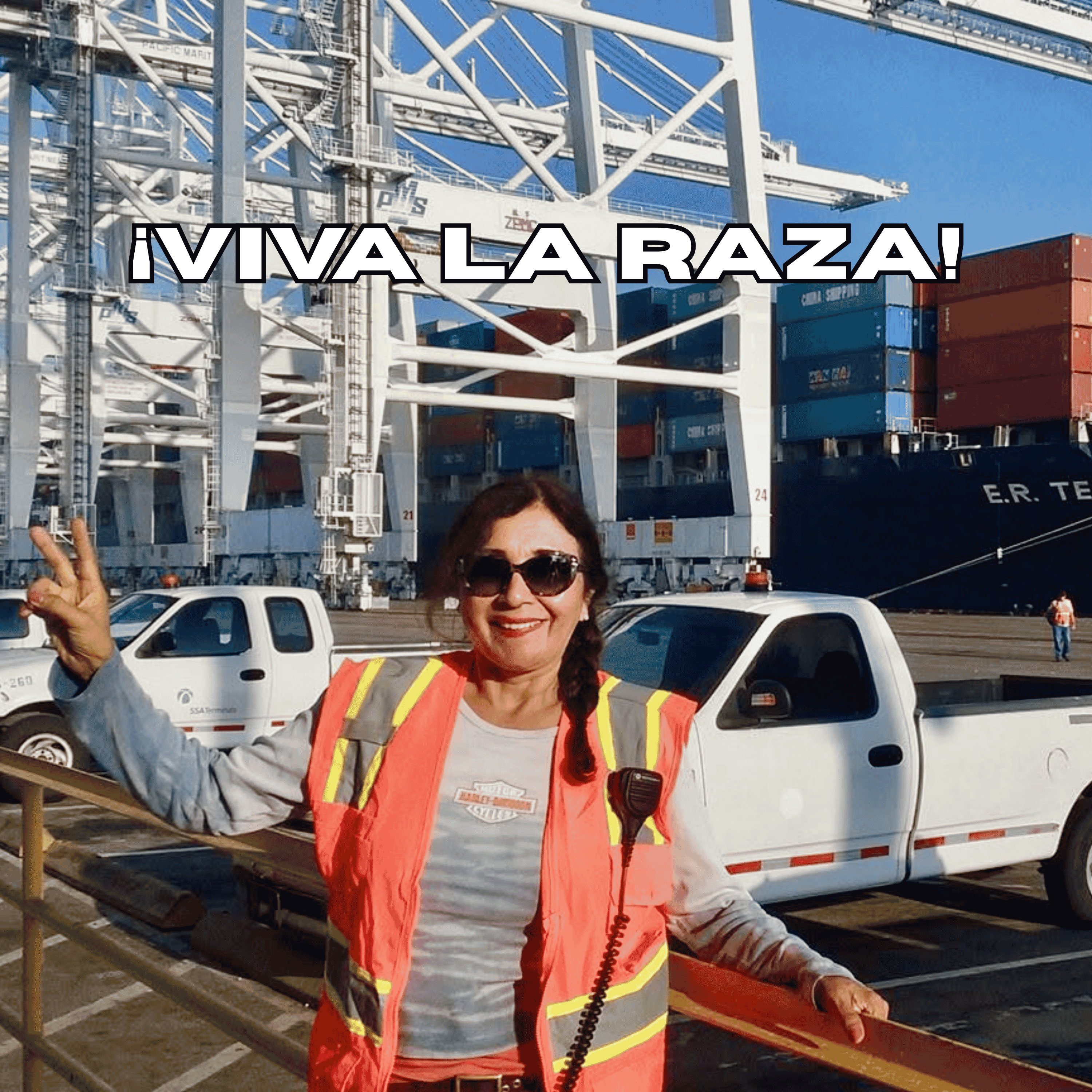
[00:35:23] Speaker C: Yeah, I worked as a drug and alcohol counselor for many, many years. And then I needed to get out of there because I got burned out a little bit. And I got burned out. I said, I'm not doing them any help and I'm not helping myself. So this is an opportunity that I'm not going to miss because I grew up in the harbor area and I knew about longshoring, and I knew that they had really good benefits. And that was another culture shock. I mean, from going from a loving, spiritual, nurturing environment to the hardcore docks,
[00:35:58] Speaker B: to Popeye the sailor van, where the
[00:35:59] Speaker C: guys cuss and drink and smoke weed while they're working and nobody says anything. You know, it's just crazy. And then you have heavy machinery and cranes and ships and. And all this stuff. And. And everybody enables everybody to do what they. Whatever they're doing. And so it's very scary. Very scary.
[00:36:22] Speaker B: So are you. So you're. You're probably pretty pro union and of course, socialist.
[00:36:27] Speaker C: Of course. I love unions. I'm going to tell you why.
When I was a counselor, I worked at Little Company Ameri, which was a. A Catholic hospital, as a drug and alcohol counselor. And this one counselor came in and I had way more experience. I had my credentials, I had my certification, you know, and all that. And he got paid more than me because he was a male, because this is a Catholic hospital.
So the males got paid more than I did. And I blew it. I just said, forget this. I'm out of here. That's what I caused me to. So the union, when I work with you, me and you are working together, and we have the same job, we get the same pay, you know, for the same job.
[00:37:12] Speaker B: As much as I'd like more money, I'm with you on that.
[00:37:16] Speaker D: Yeah.
[00:37:16] Speaker B: The way it should be.
[00:37:19] Speaker C: So, you know, that's what caused me to really lock into the unions. And I'm very pro unions because I believe they're. They work for the workers, you know, and they. They work for us. You know what I mean? Even though I think my union is kind of corrupt, to tell you the truth.
But you know what?
They really help us. They helped all the workers. They fight for our jobs and our pay and everything else, benefits and all that.
[00:37:49] Speaker B: It just feels like it's so bleak, you know, is that. That's. That's where we should be headed, is we all have kind of like a democratic control of our institutions, including work, you know, including everything. And, you know, it's just not good enough to kind of.
You know, that's how I felt in 2020 when I voted for Biden, is that I.
What we were doing was we were just trying to get the fascist out of office.
And then we were all going to roll up our sleeves and things just kind of stayed stagnant, and it just ended up going right back to, you know, so now. Now that we're in Trump, too, I feel like whatever the. Whatever comes next, you know, is really going to require us to address all the things that we didn't address. Time.
[00:38:34] Speaker C: Yeah, I hate Trump, so I don't know what else to tell you.
[00:38:38] Speaker B: And I think he's, he's not that cool.
[00:38:40] Speaker C: He's a very sick man and shouldn't be running. I don't even understand how people cannot even see through how he is, how he really is, and how people can really back him up or think he's great when he's just so narcissistic. And it's all about him and it's all about what he wants. And it's just, it's just, I just can't even wrap my head around that. Just can't even comprehend it.
And so, you know, I don't know. I just, I don't really want to get into all that because I'll start.
[00:39:17] Speaker B: Yeah, you'll never be able to stop.
[00:39:18] Speaker C: Yeah, I'll start cussing up a storm.
I really, I can't stand Trump and I can't stand. But you know what? I'm going to tell you something.
The honest to God truth. I'm glad that I'm an American and that I live in America because I would, you know, other countries, I mean, like, there's some countries where women are very, you know, they have to be, they're like second class citizens. And, and I just, it breaks my heart, you know, and I'm glad that even though all this ugliness is happening in America right now and our president is just a very sick person, I'm glad I still live here.
You know, I'm glad I still live here because I'm not being told how to dress, what to do, you know, how to act, you know what I mean? It's like I'm not being controlled directly.
[00:40:19] Speaker B: Yeah, well, I, that's how I feel.
[00:40:22] Speaker C: Yeah, I still have freedom. I still have, you know, an amount of freedom that other women in other countries don't have, you know, and, and, and so I just feel that I'm very blessed to be an American.
And even though we're not as a country, we're not doing very well right now. And I'm sure other countries are laughing their asses off on what's going on here. But you know what?
Hopefully his term will be over and we could get past this and hopefully the next president will do a better job. I don't know.
[00:41:05] Speaker B: To be anti immigrant is to be anti American. I feel like, oh yeah, we're a country of influence.
[00:41:09] Speaker C: Oh, yeah, absolutely.
[00:41:10] Speaker B: And that means what, the anti immigrant movement. That means being anti American.
[00:41:13] Speaker C: Yeah.
[00:41:14] Speaker B: And what you just said about like not taking your citizenship for granted and you know, and really Feeling blessed to live here in this place, despite its problems. Like, I feel like there's nobody more patriotic than, you know, our immigrant communities, you know, and.
And I just.
It's one of the greatest, greatest sins of this era, how poorly we're treating people who make this country what it is and bring its actual value.
[00:41:43] Speaker C: Yeah, absolutely. I mean, not only Mexican Americans, but the Irish, you know, Italians, Chinese, Japanese, African Americans, just everybody. This is one of the things that.
That I know is my purpose in life is to help others, you know, in my recovery.
If. When I carry the message, if I could just help one person that listens to my story, which I didn't say a lot of it, but, you know, I just said a little bit of it. But.
And I sponsor the women that I have, that I sponsor. I just love them like they're my daughters, you know, and I'm very protective of them and just like a mama bear. But I also, you know, tell them like it is. You know, I'm tough and tender, and I confront them on their stuff that, you know, needs to be confronted and in a loving way. And.
And I just feel very honored and grateful that I. That I've been on this sacred journey. I call it a sacred journey of recovery.
And it's just like, very, very sacred to me to be on this journey and to help others get on this journey, too, and to guide them through this process, because recovery is not for sissies.
It sure is not for sissies. You have to have courage, and that's where AA comes in and the support of the group where you could get that courage to keep going and, you know, and not give up.
And so I just. I feel very honored and blessed, and I feel this is my purpose in life, is to help others, you know, and not only just alcoholic women, there's a. A couple of homeless kids that live down. Down by the park by where I live. And I'm always giving them money, and I gave him some clothes and, you know, just to be. Be. Be of service and. And, you know, and I rescued three cats and three dogs.
And it's like. It's like, okay, you know, since I don't have any grandchildren, God said, here you go. Have some fur babies to take care of.
Because I'm the only Mexican I know that has no grandchildren. At age almost 72 years old, you know, I don't have any grandchildren because my son and his wife. Wife, they decided a long time ago they're going to go for their education and. And they both have master's degrees in art, and they're going to do that, and they're not going to have kids, but they have three dogs also, so, you know, grandbabies. Yeah, yeah, they're my grandpuppies. And so I'm very happy, you know, that I. That I'm able to do that and that I have the. The means to take care of them, you know, that I have the. The, Like, I go to the butcher shop and get, like, all the organs for the dogs and cook it for them and put it in their dry food. I spoil my dogs, you know, and I make sure that they're healthy and. And my kitties, too, you know, I rescued two kittens.
What happened is the. The neighbor, she passed away, and she was feeding this mama kitty with her kittens, and she passed away. And I found out that the kittens were the mom, and the kittens weren't being fed anymore, so I started feeding them, and the house was empty where she died, and it was being repaired and being remodeled, and so I was going over there to feed these kittens. And then the storm hit in December. Remember the storm in December?
[00:45:19] Speaker B: Yeah, I think so. Yeah.
[00:45:20] Speaker C: We had a storm here in December
[00:45:22] Speaker B: and multiple days of rain, right?
[00:45:24] Speaker C: Yeah. And all in a row. And then the mama kitty died, and she. And the two of the kittens died, so there was two left, and they were orphaned. And I just said, oh, my gosh. And the man said, well, you can't come and feed them over here anymore because I'm going to rent the house now that it's remodeled. So I took the kittens to my house, and I've been. And I've had them ever since.
They're my babies now.
I had them fixed and vaccinated, and now. And then we had a. Another older cat that is, like, taking them under his wing, too.
And then I rescued three other dogs. So anyway, I'm just like, wow, you
[00:46:00] Speaker B: really walk the walk and. Yeah, just about. I mean, what you're saying about service. Like, I listened to your pitch on a Sunday morning. I started going to a new meeting, and I just. I. You know, you've got a full life, and you've got people that love you and depend on you. You don't need to be there, but you choose to be there because you want to be of service and you want to pay it forward. And, you know, coming onto the podcast, you know, like, you didn't know me, and you took a chance and came and did this, and so.
[00:46:28] Speaker C: Thank you.
[00:46:29] Speaker B: Thank you, Audrey. You know, we're going to have to get you in person one of these days.
[00:46:33] Speaker D: Yeah, I'll book a flight right now.
[00:46:35] Speaker B: All right.